
%201.svg)


HIPAA Compliance Checklist for 2025

Most enterprises don't have an AI strategy problem. They have an AI visibility problem. Employees are already using ChatGPT, Copilot, Gemini, and dozens of other tools without IT's knowledge and any audit trail.
Building a structured AI governance framework is how organizations move from reactive to controlled without creating unnecessary bureaucracy. And it doesn't have to take months.
The 30-day approach works by breaking governance into four weekly phases: discovering what AI is in use, defining ownership and policies, implementing controls and approval workflows, and setting up continuous monitoring.
CloudEagle.ai surfaces shadow AI across the organization, scoring vendor risk, enforcing access policies, and generating audit-ready reports so IT teams spend less time on manual governance.
In this article, we'll cover why a AI governance tool matters, what the 30-day AI governance framework looks like week by week, and how CloudEagle.ai automates execution across every phase.
Why AI Governance Can't Wait?
AI is no longer confined to centralized data science teams. It now shows up everywhere: inside SaaS tools, browser extensions, copilots, APIs, and employee-built workflows. This decentralized adoption is exactly what makes AI powerful, and dangerous.
Without a defined AI governance framework, organizations struggle to answer basic questions:
- Which AI tools are employees using?
- What data is being shared with models?
- Who owns risk decisions?
- Can we explain or audit AI-driven outcomes?
At the same time, regulatory and internal pressure is mounting. Frameworks like the EU AI Act, internal enterprise AI policies, and industry compliance expectations are pushing organizations to prove control, transparency, and accountability.
An effective AI governance framework helps enterprises innovate with confidence.

The 30-Day Plan: Build Your AI Governance Framework Fast
The fastest way to build AI governance framework is to approach it in weekly phases, each with a clear goal and outcome. This keeps momentum high and avoids overengineering early.
A. Week 1: Discover & Assess
AI governance framework starts with visibility. You can’t govern what you can’t see. In the first week, focus on discovering how AI is actually being used across your organization.
Key actions:
- Inventory all AI tools, copilots, browser extensions, APIs, and embedded AI features
- Identify AI use cases across departments (IT, marketing, sales, HR, finance)
- Classify each use case by risk level: low, medium, or high
- Map data flows, including sensitive data exposure and third-party vendors
This step often reveals far more AI usage than expected, especially tools adopted outside formal procurement.
The output of week one should be a clear AI usage map and an initial AI risk baseline.
B. Week 2: Define Roles, Policies & Guardrails
Once visibility is established, governance shifts from discovery to decision-making. Start by assigning ownership. AI governance framework cannot live in a vacuum.
Actions for week two:
- Establish an AI governance committee or working group
- Assign owners for AI tools, policies, and risk approvals
- Draft core AI governance policies
- Define approval workflows for introducing new AI tools or features
At this stage, policies should be practical and enforceable, not theoretical. The goal is to guide behavior, not overwhelm teams.
C. Week 3: Implement Controls & Workflows
Policies without controls don’t work. Week three is where governance becomes operational. This is where organizations translate intent into systems and workflows.
Key focus of AI governance framework should be:
- Integrate AI risk scoring into procurement and vendor review processes
- Establish validation requirements for higher-risk models and use cases
- Define access controls and permission structures for AI tools
- Create prompt guidelines and review checkpoints for sensitive workflows
This step ensures AI decisions are not only approved, but repeatable, explainable, and enforceable.
D. Week 4: Monitoring, Documentation & Rollout
The final week is about sustainability. Governance should continue working after the initial rollout.
Actions to complete the framework:
- Enable AI usage monitoring and drift detection where applicable
- Set up centralized audit logs for AI decisions and access
- Document the full AI governance framework in a single playbook
- Train employees and run change-management communication
- Establish a quarterly review cadence for policies, risks, and controls
By the end of week four, governance is no longer a project, it’s a process.
What Is the 30/70 Framework in AI Implementation?
There is no single 30/70 framework, and the term usually points to one of three ideas about where AI effort goes:
- Task split: AI handles roughly 70% of repetitive execution while people keep about 30% for oversight and judgment
- Budget heuristic: the model accounts for roughly 30% of a working AI system, and the other 70% is data, infrastructure, evaluation, and operations
- BCG's 10-20-70 rule: 10% of effort on algorithms, 20% on technology and data, and 70% on people and processes
Every version puts the majority of the work in people, process, and the systems around the model. That is what a 30-day rollout is made of, and it is why teams that set out to build AI governance framework get further by starting with owners, approvals, enforcement, and a review cadence than by comparing models.
How Does CloudEagle.ai Help With AI Governance Implementation?
AI tools are already inside the enterprise without procurement reviews, AI governance framework, or IT's knowledge. The question is no longer whether employees are using unapproved AI tools.
As AI adoption surges across SaaS ecosystems, CloudEagle.ai provides a robust, automated AI governance to help enterprises govern access, control risk, ensure compliance, and reduce SaaS waste.
A. Shadow AI Discovery
CloudEagle.ai automatically identifies every AI tool in use across the organization, including unapproved applications, the moment adoption begins.
Discovery runs across SSO, browser activity, network telemetry, and finance systems simultaneously to surface shadow AI tools whether purchased on a corporate card, accessed through a personal account, or installed as a browser extension.
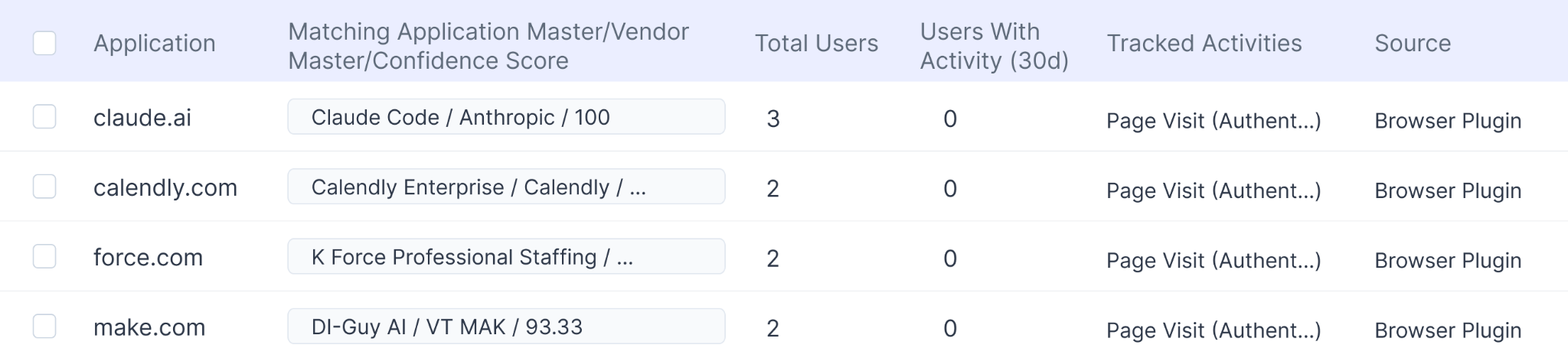
CloudEagle detects AI-enabled SaaS tools, embedded GenAI features, OAuth authorizations, and browser logins, correlating identity, usage, and spend data to identify rogue AI usage.
B. AI Usage and Spend Tracking
CloudEagle tracks models, token usage, teams, and spend so Finance and IT can align AI costs to actual business usage.
Per-user, per-model consumption is tracked across Claude, Cursor, ChatGPT, and Gemini, with run rate forecasting that projects spend before the invoice arrives.
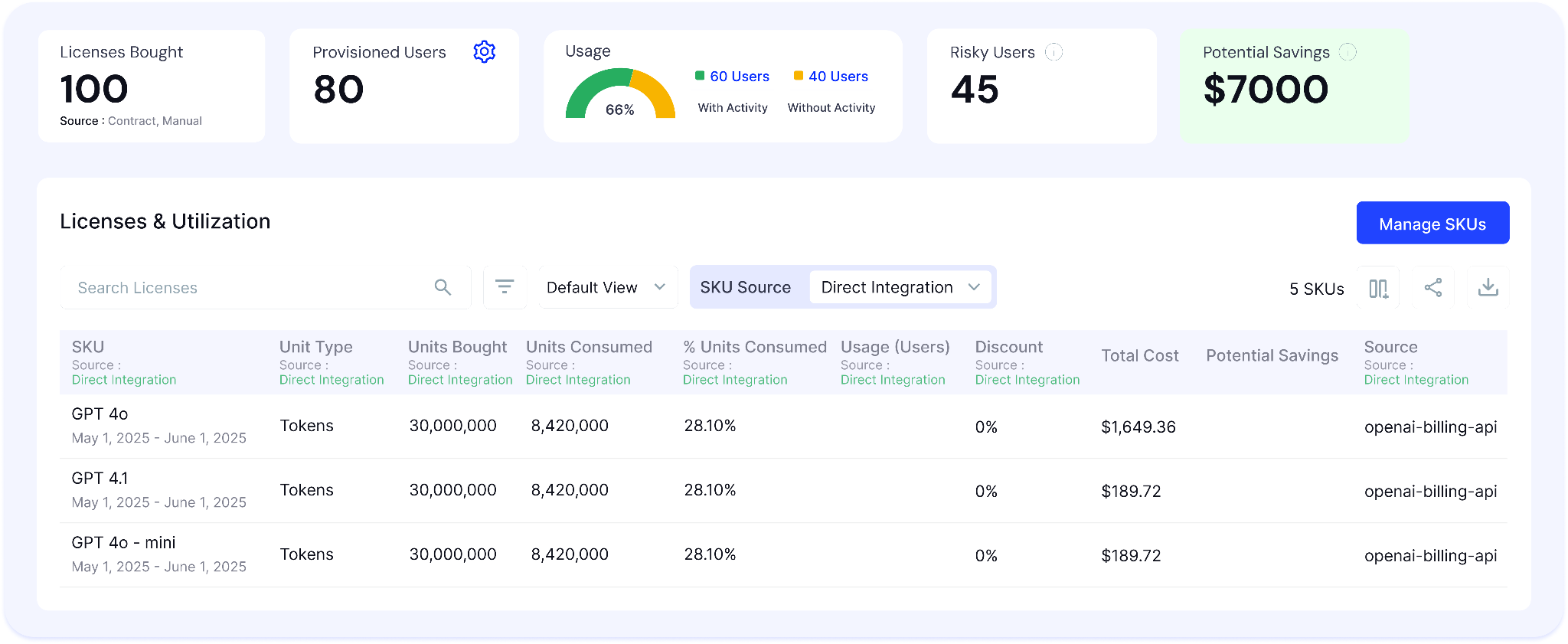
As one customer described it: "AI spend scales with usage in ways a contract never captures. CloudEagle.ai gives enterprises visibility into token consumption, license utilization, and shadow AI in one place, so the bill is never a surprise
C.GenAI Risk Scores
GenAI Risk Scoring evaluates AI vendors based on data training policies, feature controls, certifications, and compliance posture so security teams can assess risk before approval.
For every vendor in the portfolio, CloudEagle.ai surfaces whether customer data is used to train AI models, whether AI features can be disabled at the enterprise level, and whether the vendor meets SOC 2, ISO 27001.
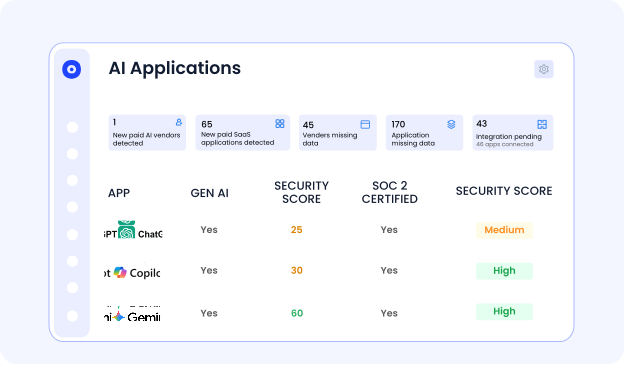
That question used to require weeks of manual research. CloudEagle.ai answers it in seconds, across every application in the portfolio
D. Secure Browser
CloudEagle's real-time usage enforcement intercepts access to unapproved AI tools and redirects users to approved alternatives at the moment behavior occurs, before any sensitive data is entered.
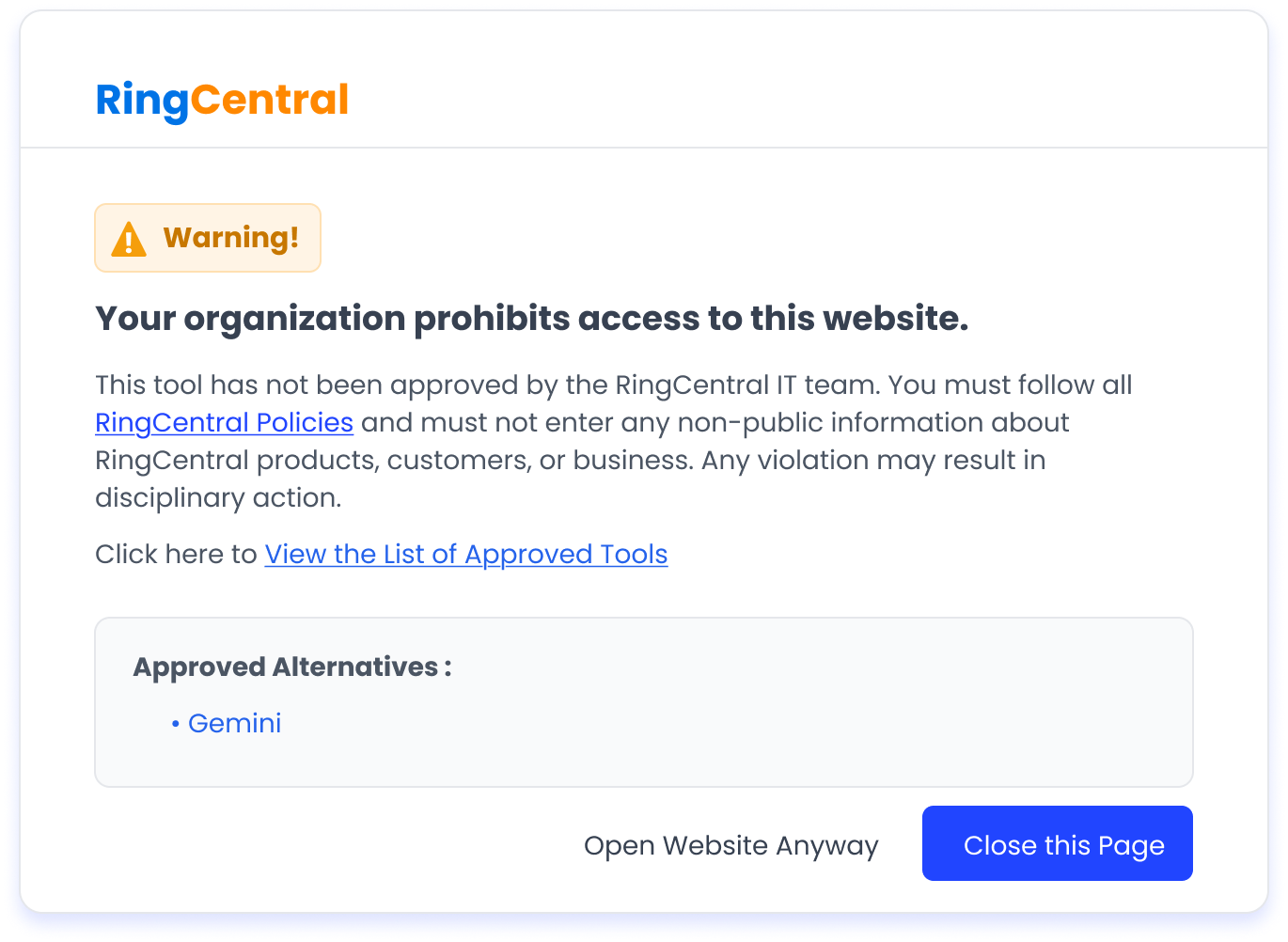
When an employee tries to access a personal Claude.ai account or an ungoverned AI tool, a flash page steps in immediately, explaining the policy and directing them to the approved alternative.
E. Data Loss Prevention
For approved AI tools, CloudEagle's data loss prevention layer governs what data can be entered into them, blocking PII, source code, financial data, and proprietary documents at the prompt level.
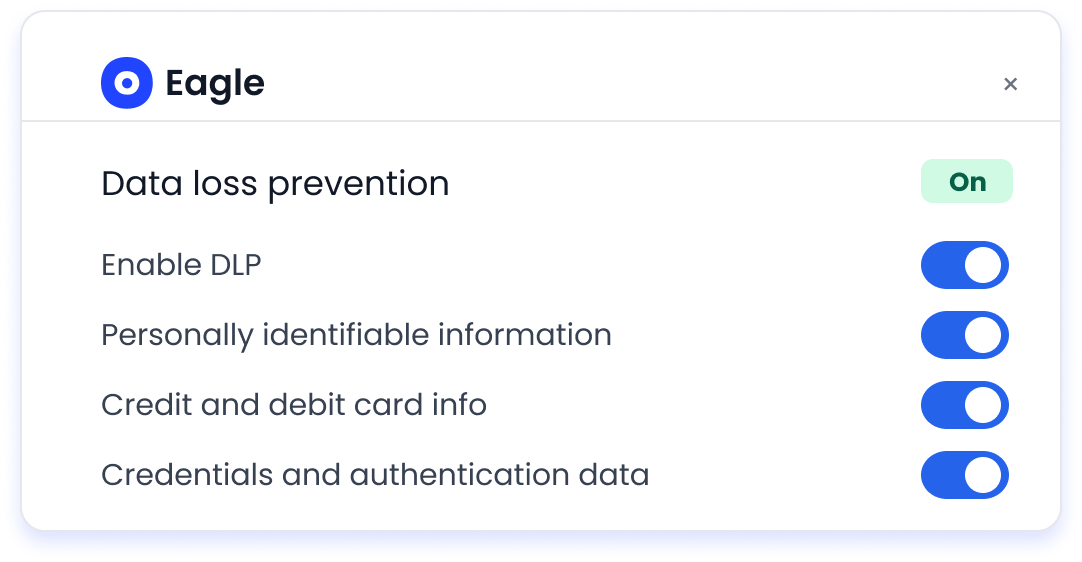
CloudEagle monitors what data enters AI tools, blocks sensitive content from reaching unmanaged applications, and produces a complete audit trail, delivering the kind of defensible governance regulators and boards now require
AI Without Governance Is Just Risk


What Comes After the First 30 Days of AI Governance?
Use the baseline to build an AI governance framework in full. The work below needs more time and gets easier once the inventory and owners exist:
- Model validation: Establish validation requirements for higher-risk models and use cases, especially AI you build or fine-tune in-house
- Drift and prompts: Add drift detection for models in production and create prompt guidelines and review checkpoints for sensitive workflows
- Agent guardrails: Put approval gates on AI agents that can take actions in business systems
- Framework alignment: Map controls to the NIST AI Risk Management Framework and track progress with an AI governance maturity model
- EU AI Act high-risk obligations: Prepare for the December 2, 2027 deadline for stand-alone high-risk systems under Annex III
Conclusion
Building an AI governance framework does not require months of planning or heavy bureaucracy. In just 30 days, organizations can move from uncontrolled AI adoption to a structured, enforceable governance model.
By following a phased approach, discover, define, implement, and monitor, teams reduce AI-related risks, meet compliance expectations, and create a foundation for responsible AI at scale.
The organizations that act now will be best positioned to innovate safely as AI continues to reshape how work gets done.
The next step is simple: start governing your AI stack with an AI governance framework and the right platform built for modern enterprises.
Frequently Asked Questions
1. What is an AI governance framework?
An AI governance framework is a structured approach that defines how AI systems are approved, used, monitored, and audited within an organization to manage risk, compliance, and accountability.
2. Why is AI governance important for enterprises?
AI governance helps enterprises reduce risks such as data leakage, bias, hallucinations, and regulatory exposure while enabling responsible and scalable AI adoption.
3. How long does it take to build an AI governance framework?
A functional AI governance framework can be built in as little as 30 days using a phased approach focused on discovery, policy creation, controls, and monitoring.
4. What should be included in an AI governance policy?
An AI governance policy should include acceptable use guidelines, data handling rules, human oversight requirements, transparency expectations, and audit logging standards.
5. How do organizations monitor AI systems for risks?
Organizations monitor AI risks through usage tracking, access controls, audit logs, model performance reviews, and periodic governance reviews aligned with compliance requirements.
Every AI Tool Should Be Governed


.avif)


.avif)
.avif)




.png)







.avif)
.avif)
.avif)


