HIPAA Compliance Checklist for 2025

The next recession could hit mid-contract. Here's how to lock in the right to reduce SaaS seats or pause billing before your organization gets stuck paying for software it no longer needs.
A fixed multi-year SaaS agreement can become a financial burden when budgets shrink, teams restructure, or business priorities change. Without clearly negotiated adjustment rights, organizations may have to keep paying for unused licenses, committed consumption, and services they can no longer afford.
The pressure is already visible. Flexera's 2026 State of ITAM Report found that 47% of respondents negotiate software contract terms to manage SaaS. BetterCloud's 2025 State of SaaS Report found that 42% of organizations cited budget pressure as a reason for SaaS consolidation or spending cuts.
Organizations should not wait for a downturn to renegotiate their software commitments. Before signing a multi-year agreement, negotiate these five contractual protections to keep SaaS spending aligned with changing business needs.
1. Negotiate the Right to Reduce SaaS Seats
Many SaaS contracts require organizations to commit to a fixed number of users for the entire contract term. If the workforce shrinks or departments reduce software usage, the organization may continue paying for licenses it no longer needs.
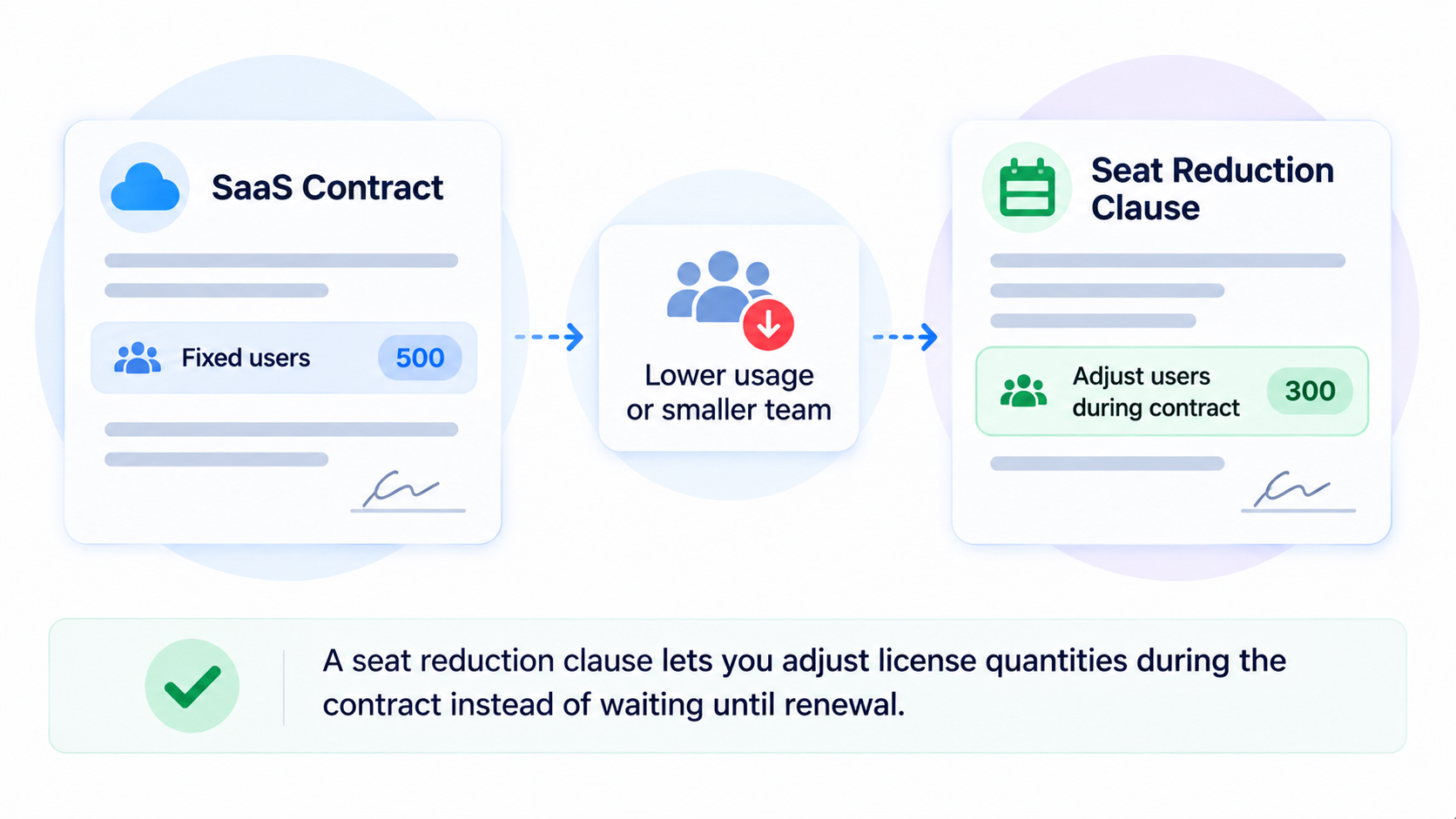
A seat reduction clause allows customers to adjust license quantities during the contract instead of waiting until renewal.
What to check in the contract:
- Minimum seat commitment: Does the agreement require payment for a fixed number of users, regardless of actual usage?
- Reduction window: Can the organization reduce seats quarterly, annually, or at another agreed interval?
- Pricing impact: Will reducing licenses increase the per-seat price or trigger repricing of the remaining subscription?
What to negotiate before signing:
- Include the right to reduce seat counts at defined intervals during the contract.
- Agree on a minimum license threshold and the maximum reduction permitted. For example, negotiate a 20% reduction option if business needs change.
- Specify how quickly reduced licenses will be reflected in invoices.
- Prevent vendors from imposing unexpected penalties or repricing the entire Saas agreement after an approved reduction.
For example, an organization with 500 contracted seats could negotiate the right to reduce its commitment to 400 during an agreed adjustment window. The reduction should be documented in the contract rather than left to vendor approval during a downturn.

2. Add Trigger-Based Spending Reduction Clauses
A business can face unexpected changes long before its contract expires. Revenue declines, layoffs, department closures, acquisitions, or major project cancellations can all reduce software demand.
Trigger-based clauses allow organizations to adjust their SaaS commitments when specific business events occur. Instead of relying on a general request to renegotiate, the contract defines when adjustment rights become available.
What to check in the contract:
- Business triggers: Does the agreement recognize events such as workforce reductions, restructuring, or significant revenue declines?
- Adjustment rights: Can these events activate seat reductions, lower spending commitments, or changes in service scope?
- Approval requirements: Does the vendor have unrestricted discretion to accept or reject the requested adjustment?
What to negotiate before signing:
- Define measurable triggers, such as a 20% workforce reduction or an agreed decline in business activity.
- Link each trigger to a specific contractual right, such as reducing licenses or removing optional modules.
- Set notification periods and documentation requirements for activating the clause.
- Clarify whether adjustments affect future invoices, minimum commitments, or renewal pricing.
Avoid vague wording such as "material business changes." Define the events, thresholds, and remedies clearly so both parties understand when the clause applies.
3. Secure the Right to Pause SaaS Consumption and Billing
Some SaaS services charge based on consumption, including API calls, storage, transactions, or processing volume. During a downturn, organizations may need to reduce usage temporarily without terminating the entire agreement.

Without a consumption pause clause, customers may continue paying for committed capacity or unused service allocations.
What to check in the contract:
- Consumption commitments: Does the agreement include minimum monthly or annual usage requirements?
- Pause permissions: Can the organization temporarily suspend consumption without terminating the service?
- Billing during suspension: Will fixed fees, minimum charges, or committed usage payments continue during the pause?
What to negotiate before signing:
- Include a temporary suspension option for eligible services or consumption-based charges.
- Define the maximum pause period, such as 30, 60, or 90 days, and the notice required to activate it.
- Clarify whether unused credits or prepaid balances can roll over after service resumes.
- Specify how access, data retention, and service restoration will work during and after the pause.
For example, a company using a data-intensive SaaS platform may negotiate a 60-day consumption pause during a major restructuring. The agreement should explain whether the pause applies to the entire service or only selected usage components, and whether any minimum charges continue.
4. Include Flexible Cancellation and Early Termination Rights
A long-term SaaS contract can become difficult to manage when an organization closes a business unit, discontinues a project, or faces a sustained financial downturn.
Standard termination clauses often focus on non-payment, material breach, or vendor failure. They may not give customers enough flexibility to exit when their own business requirements change.
What to check in the contract:
- Early termination: Can the organization terminate selected services or modules before the contract expires?
- Cancellation costs: Does early termination trigger remaining subscription fees or other penalties?
- Exit obligations: Does the agreement explain how data exports, access removal, and transition assistance will work?
What to negotiate before signing:
- Add early termination rights for clearly defined business events.
- Negotiate reasonable notice periods and agreed termination fees, if applicable.
- Allow partial termination of unused modules or services without ending the entire agreement.
- Require vendors to provide data exports and reasonable transition support.
A partial termination right can be especially useful when an organization needs to discontinue one department's software access but still relies on the platform elsewhere. Define how unused prepaid fees and outstanding charges will be handled when exercising this right.
5. Protect Pricing and Payment Terms During Uncertain Periods
Even when an organization can reduce seats or pause usage, unexpected price increases and rigid payment schedules can continue putting pressure on its budget.
A multi-year agreement should include pricing protections and payment options that account for changing business conditions.
What to check in the contract:
- Price increases: Can the vendor increase subscription rates during the contract term?
- Payment schedules: Does the agreement require annual prepayment or inflexible billing commitments?
- Additional charges: Can changes in usage, service tiers, or renewal terms introduce unexpected costs?
What to negotiate before signing:
- Set a cap on annual price increases or agree to fixed pricing for the contract term.
- Negotiate quarterly billing or other payment schedules where possible.
- Define how discounts and volume-based pricing change when seat counts decrease.
- Require advance notice of pricing changes, additional fees, and changes to billing terms.
Make sure pricing protections still apply when the organization exercises its reduction or suspension rights. Otherwise, a vendor could offset the savings through higher rates on the remaining licenses.
6. 5 Contract Terms to Negotiate Before Signing a Multi-Year SaaS Agreement
Before committing to a multi-year SaaS agreement, ask:
- Can the organization reduce SaaS seats during the contract term without waiting for renewal?
- Do specific business events trigger the right to lower spending or change service commitments?
- Can consumption-based services be temporarily paused without unnecessary penalties?
- Does the agreement allow partial cancellation or early termination when business needs change?
- Are pricing increases, payment schedules, and minimum commitments clearly defined?
Document the answers and make sure the agreed protections appear in the signed contract. Verbal assurances from a vendor may not provide the same protection as enforceable contractual terms.
7. Build Flexibility Into SaaS Contracts Before the Next Crisis
A long-term SaaS agreement should support business needs without locking an organization into commitments it may no longer be able to justify. The five protections discussed above, seat reductions, trigger-based adjustments, consumption pauses, cancellation rights, and pricing safeguards, give procurement teams specific terms to negotiate before signing.
Keeping SaaS contracts, vendor commitments, and renewal dates organized also helps teams identify agreements that need attention. Platforms such as CloudEagle.ai can provide visibility into vendor information and renewals, helping procurement and IT teams coordinate contract reviews.
Do not wait for a recession or budget freeze to ask for flexibility. Negotiate the adjustment rights while the agreement is still being discussed, when your organization has more room to define the terms.
Never Let a Renewal Catch You Off Guard.


8. FAQs
1. Can a company reduce SaaS licenses before a contract expires?
Yes, if the agreement includes a seat reduction clause. It should specify when reductions are allowed, the minimum license commitment, notice requirements, and how pricing changes after the adjustment.
2. What is a trigger-based clause in a SaaS contract?
A trigger-based clause allows a specific business event to activate a contractual right. Examples include workforce reductions, restructuring, or significant changes in business operations. The contract should define each trigger and the adjustment it permits.
3. Can organizations pause SaaS subscriptions temporarily?
They can negotiate temporary suspension rights for eligible services or consumption-based charges. The agreement should specify the pause period, billing treatment, data retention, and conditions for restoring service.
4. What should a SaaS contract include for early termination?
It should define permitted termination events, notice periods, applicable fees, and obligations for data export and transition assistance. Partial termination rights can also help organizations discontinue selected services without ending the entire agreement.
5. When should companies negotiate SaaS contract flexibility?
Ideally, during the initial contract negotiation or before renewal. It is easier to agree on seat reductions, billing pauses, cancellation rights, and pricing protections before signing than to request them after business conditions change.
No More Last-Minute Renewal Scrambles.