You need to enable JavaScript in order to use the AI chatbot tool powered by ChatBot

How an IT Ops Manager Navigated Identity Governance Through a Major Merger (And the Access Risks He'd Warn You About)

Share via:
blog-cms-banner-bg
Little-Known Negotiation Hacks to Get the Best Deal on Slack
cta-bg-blogDownload Your Copy

HIPAA Compliance Checklist for 2025

Download PDF

Mergers don't create identity governance failures. They expose the ones you've been quietly accumulating for years, especially unmonitored privileges due to role changes.

Charles T. Phillips, a seasoned IT Ops Manager, is navigating this in real time. 

His organization is going through a merger and Charles is dealing with a quieter problem: two organizations bringing years of undocumented access decisions, role changes, and deferred governance into the same house.

This isn't unique to one organization. It plays out in mergers across every industry. Technology integration gets planned carefully. Identity governance gets discovered, usually too late, usually under pressure.

Here's what he'd warn you about. And where we'd take his observations and provide a quick identity governance playbook to overcome this.

TL;DR

  • Mergers don't create identity governance problems—they expose years of accumulated access debt, including outdated permissions, access creep, and undocumented access decisions.
  • Identity governance is fundamentally a leadership challenge, not a technology challenge. Without executive alignment, governance efforts remain fragmented and difficult to sustain.
  • Internal role changes are often a bigger source of access risk than new hires, as employees accumulate permissions over time while legacy access is rarely reviewed or revoked.
  • Periodic access reviews often become compliance exercises rather than effective governance. Organizations need continuous, event-driven reviews tied to role changes, projects, and departures.
  • Successful mergers require a proactive governance strategy: inventory access before integration, establish clear ownership and guardrails, and continuously monitor permissions to prevent inherited access debt from becoming a security or compliance issue.

Why Identity Governance Breaks Down During Mergers

Pain Point 1: Governance Was Never a Technology Problem. It's a Leadership One.

Most merger checklists focus on technology. Which systems integrate? Which platforms consolidate? Identity governance rarely makes that list because most enterprises treat it as a technology problem to be solved with the right tool.

Phillips explains why that framing is wrong:

"Governance stops being a technical concern almost immediately. You can create pockets of good governance within individual teams, but without executive sponsorship and top-down alignment, those efforts remain fragmented and really hard to sustain."

Identity governance failures don't start in your systems. They start in company-wide team behavior:

  • Unclear ownership of access decisions
  • Leadership that approves policies but doesn't enforce them
  • Decisions that nobody documented and nobody revisited

In a merger, this gets worse fast. You're integrating two histories of decisions made without proper documentation.

"True operational maturity comes when leaders set the tone, define the principles, and ensure that all lines of business are operating under the same playbook. When that doesn't happen, you end up with technical sprawl, disconnected systems, and inconsistent processes."

Enterprises that navigate mergers well treat governance as a leadership responsibility before they treat it as a technical task. The ones that don't spend the first year post-merger untangling access sprawl they never knew existed.

Pain Point 2: You're Not Integrating Systems. You're Inheriting Access Debt.

There's a concept that rarely makes it into merger planning but should: access debt.

Access debt builds every time:

  • A role change goes unreviewed
  • A temporary permission becomes permanent
  • A governance discussion gets pushed to next quarter

It compounds quietly, invisible in day-to-day operations, until someone looks closely. The primary source? Internal role changes. And it's exactly where most organizations stop paying attention, Charles iterates,

"Internal movement is often underestimated because it's familiar. When we hire someone new, every access point is carefully assigned and evaluated. But when we have a long-time employee changing roles, there's more of a sense of trust and comfort. It feels like an evolution of that person's role, not a risk. That's exactly when access creep starts to happen."

New hires go through careful, deliberate access provisioning. Promotions, lateral moves, and temporary project assignments get waved through. The employee is trusted. Nobody asks whether their old access should be revoked before new access is granted.

Multiply this across years of growth and the debt compounds. Then a merger happens. Now you're not just managing your own organization's accumulated access risk. You're inheriting your merger partner's too:

  • Years of role changes never cleaned up
  • Temporary project access quietly made permanent
  • Privileged accounts that outlived the roles that justified them
"You'll often see outdated access that's never reviewed, temporary permissions that over time become permanent, or governance discussions that perpetually get delayed because we've got other things to do. I don't think it's blindness. I think it's prioritization."

The merger doesn't create this problem. It makes it impossible to ignore any longer.

Eliminate Overprivileges Today!

A quick checklist to govern your overprivileges and improve access hygiene
No More Overprivileges

Pain Point 3: Your Access Reviews Are a Fire Drill. Everyone Knows It.

When organizations acknowledge the access debt problem, the instinct is to schedule a review, quarterly or annual certifications. Managers get a spreadsheet, click through permissions, sign off. Governance box checked.

Phillips is direct about why this doesn't work:

"I think we treat it kind of like a fire drill. The fire drill happens, we go through the motions, we stand there for a while, and then we go back in. We check the boxes, and after a while it feels routine but it doesn't feel lived. It's not a part of our everyday."

Point-in-time reviews show you what your enterprise performs during the review window. Not how it actually operates. In a merged environment, the gap between performance and reality is where most access risk lives.

There's a deeper problem too. When reviews feel like compliance exercises, business owners stop engaging seriously. Managers approve access they don't actually evaluate. Governance becomes about looking ready rather than being ready.

"In a true governance environment, it's an everyday security posture. Whether you take a snapshot at any juncture, you're seeing what happens all the time, not just what happens during the fire drill."

The CloudEagle.ai Playbook: How To Govern Identity Before, During, and After a Merger

Charles's experience identifies the problem clearly. Here's the practical sequence we'd recommend based on those observations.

Step 1: Before the Merger Closes: Inventory Before You Inherit Debt

You can't govern what you can't see. Before integration begins, map every identity source across both organizations:

  • Every application and role
  • Every access path
  • Privileged accounts across both environments
  • Temporary permissions older than 90 days
  • Accounts tied to employees who have changed roles more than once
  • Including non-human identities

Most organizations skip this because it feels like it slows down the timeline. It doesn't. It prevents months of cleanup work after the fact. Going into a merger without this inventory is like signing a contract without reading what you're liable for.
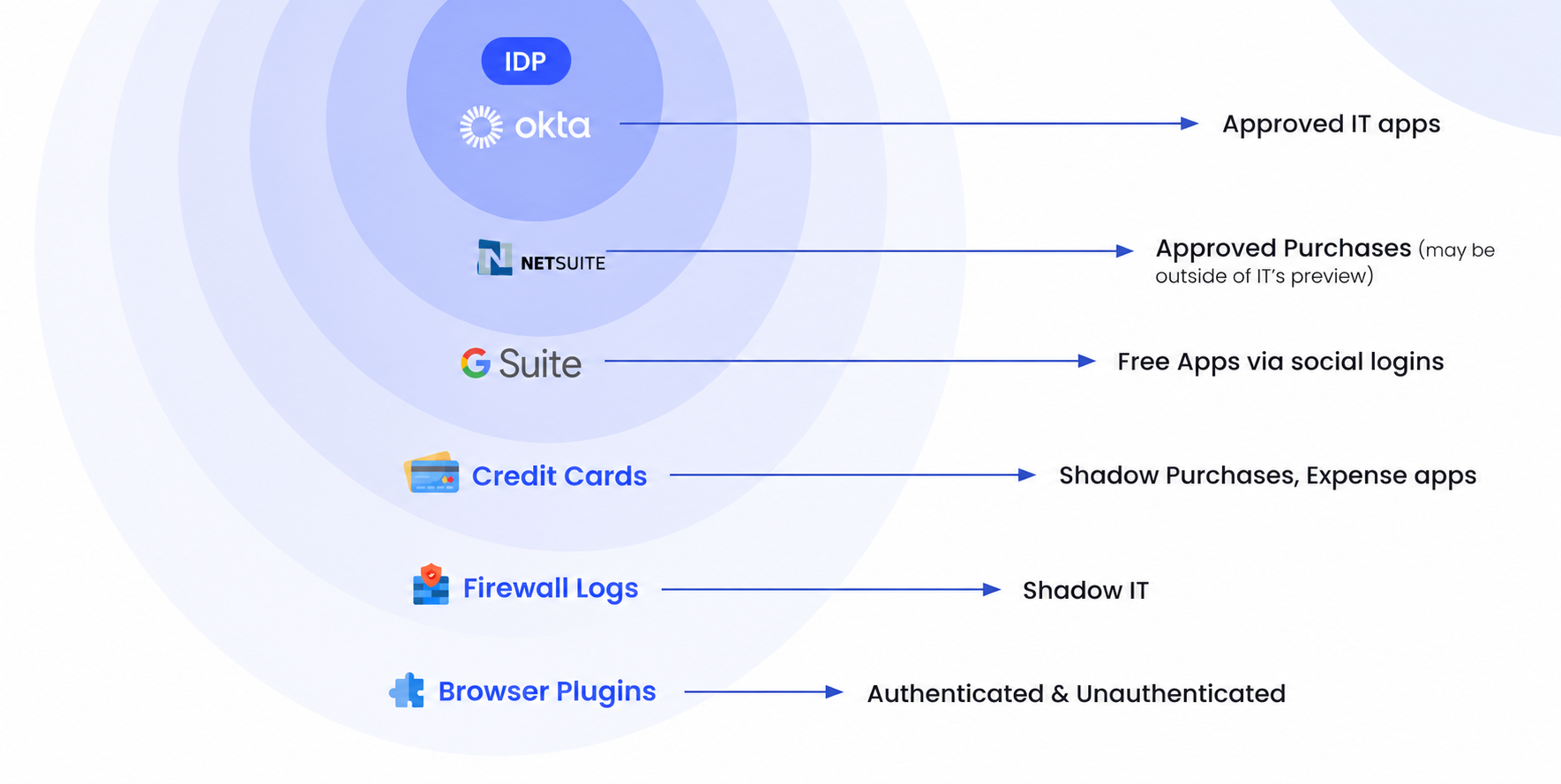
CloudEagle.ai's SaaS discovery engine and access visibility gives you a complete picture of who has access to what across your entire application environment, before you bring two access landscapes together rather than after.

Step 2: During Integration: Stop Privilege Expansion

Establish a clear policy: no net-new privileged access is granted during the integration window without explicit review. Specifically:

  • Every role mapping gets audited
  • Every temporary access grant gets an expiration date
  • Every high-risk role gets a named owner who is accountable for it

Phillips frames this as the precondition for everything else to work:

"Leadership has to provide the top-down framework, the guidelines, the parameters, and the principles that define the limits of discretion. Once that's set in place, teams can confidently go forward and make decisions because they know what the boundaries are."

Without these guardrails, the integration period becomes a window where access expands rapidly and informally. That's exactly the condition that creates the next wave of access debt.

Step 3: After Integration: Replace Review Calendars With Lifecycle Triggers

This is the change that breaks the fire drill cycle. Instead of scheduling quarterly or annual reviews, build access certification into the events that actually create access risk:

  • Role change happens? Trigger an access review.
  • Project completes? Audit the permissions that were granted for it.
  • Employee departs? Immediate revocation, not a quarterly cleanup.
  • Team restructure? Review all affected access paths.

The goal is that governance reflects how your organization actually operates every day, not how it performs during review windows.
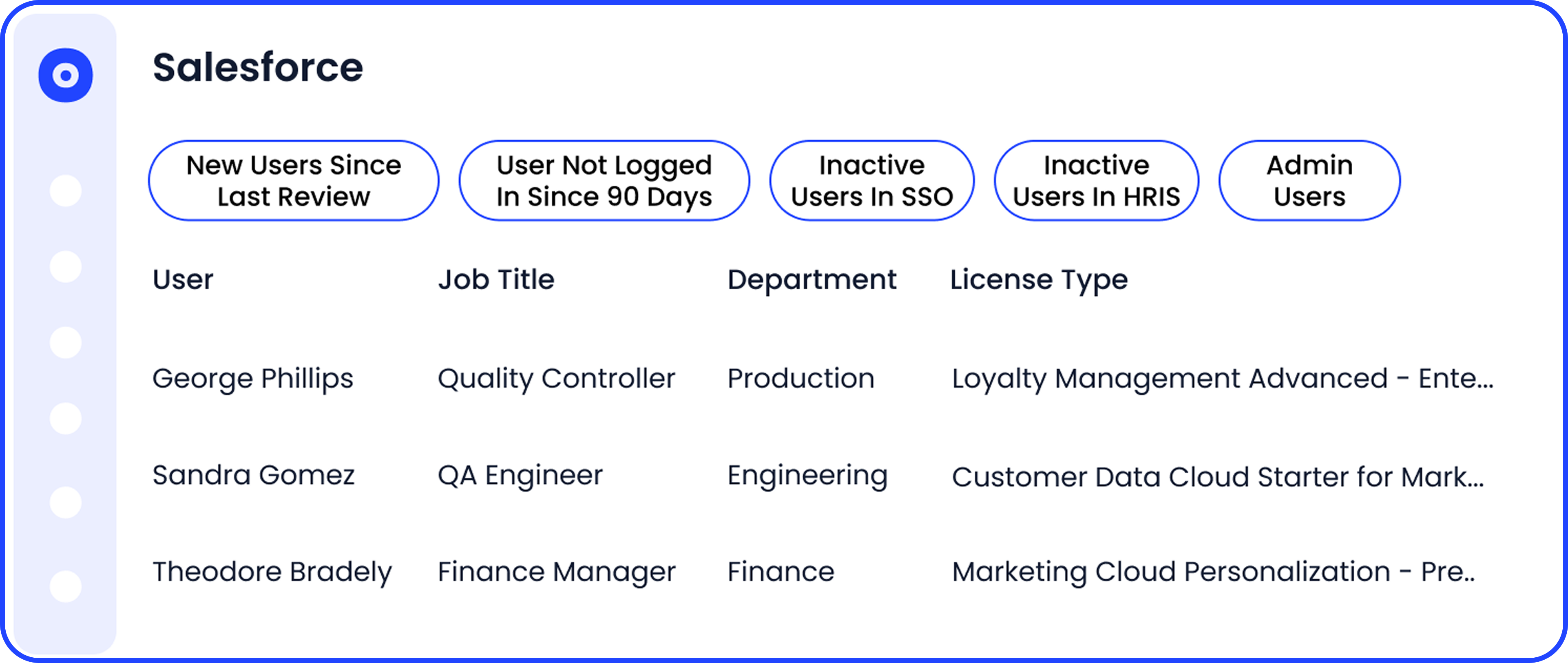
CloudEagle.ai automates these lifecycle-based access reviews, embedding them directly into the workflows where access decisions happen. Governance becomes continuous rather than periodic.

Step 4: Ongoing: Give Business Owners Context, Not Just Responsibility

Assigning access ownership to business leaders doesn't work if those leaders don't understand why it matters. And as Phillips points out, they usually don't because nobody connected their role in access decisions to real consequences.

"Access accountability often doesn't sit where it should because business owners don't fully understand the governance policies and processes behind the access. It's not malicious. They don't know what they don't know."

The fix isn't a better approval workflow. It's making the stakes concrete. Run practical sessions with business owners that show:

  • What happens when someone retains access after a role change
  • What the audit exposure looks like for their area
  • What a breach in their systems actually means for the organization

When people understand the consequences, they stop rubber-stamping and start owning the decisions.

Closing Thoughts

Every part of this playbook depends on one shift that Phillips keeps coming back to:

"The hardest shift is balancing both worlds. We're always reacting, fixing legacy access issues, putting out fires. But to move to intentional governance, we've got to carve out that time and space to build a forward-looking framework. You've got to redirect your thinking, even while managing the daily demands of the organization."

A merger forces this shift whether you're ready or not. Two organizations colliding means two sets of accumulated access debt landing on your plate, under time pressure, with everyone watching.

Struggling with access visibility ahead of or during a merger? CloudEagle.ai's IGA capabilities help organizations map, review, and govern access across their entire SaaS environment before inherited access debt becomes an incident. See how it works.

Advertisement for a SaaS Subscription Tracking Template with a call-to-action button to download and a partial graphic of a tablet showing charts.Banner promoting a SaaS Agreement Checklist to streamline SaaS management and avoid budget waste with a call-to-action button labeled Download checklist.Blue banner with text 'The Ultimate Employee Offboarding Checklist!' and a black button labeled 'Download checklist' alongside partial views of checklist documents from cloudeagle.ai.Digital ad for download checklist titled 'The Ultimate Checklist for IT Leaders to Optimize SaaS Operations' by cloudeagle.ai, showing checklist pages.Slack Buyer's Guide offer with text 'Unlock insider insights to get the best deal on Slack!' and a button labeled 'Get Your Copy', accompanied by a preview of the guide featuring Slack's logo.Monday Pricing Guide by cloudeagle.ai offering exclusive pricing secrets to maximize investment with a call-to-action button labeled Get Your Copy and an image of the guide's cover.Blue banner for Canva Pricing Guide by cloudeagle.ai offering a guide to Canva costs, features, and alternatives with a call-to-action button saying Get Your Copy.Blue banner with white text reading 'Little-Known Negotiation Hacks to Get the Best Deal on Slack' and a white button labeled 'Get Your Copy'.Blue banner with text 'Little-Known Negotiation Hacks to Get the Best Deal on Monday.com' and a white button labeled 'Get Your Copy'.Blue banner with text 'Little-Known Negotiation Hacks to Get the Best Deal on Canva' and a white button labeled 'Get Your Copy'.Banner with text 'Slack Buyer's Guide' and a 'Download Now' button next to images of a guide titled 'Slack Buyer’s Guide: Features, Pricing & Best Practices'.Digital cover of Monday Pricing Guide with a button labeled Get Your Copy on a blue background.Canva Pricing Guide cover with a button labeled Get Your Copy on a blue gradient background.

Enter your email to
unlock the report

Oops! Something went wrong while submitting the form.
License Count
Benchmark
Per User/Per Year

Enter your email to
unlock the report

Oops! Something went wrong while submitting the form.
License Count
Benchmark
Per User/Per Year

Enter your email to
unlock the report

Oops! Something went wrong while submitting the form.
Notion Plus
License Count
Benchmark
Per User/Per Year
100-500
$67.20 - $78.72
500-1000
$59.52 - $72.00
1000+
$51.84 - $57.60
Canva Pro
License Count
Benchmark
Per User/Per Year
100-500
$74.33-$88.71
500-1000
$64.74-$80.32
1000+
$55.14-$62.34

Enter your email to
unlock the report

Oops! Something went wrong while submitting the form.

Enter your email to
unlock the report

Oops! Something went wrong while submitting the form.
Zoom Business
License Count
Benchmark
Per User/Per Year
100-500
$216.00 - $264.00
500-1000
$180.00 - $216.00
1000+
$156.00 - $180.00

Enter your email to
unlock the report

Oops! Something went wrong while submitting the form.

Get the Right Security Platform To Secure Your Cloud Infrastructure

Please enter a business email
Thank you!
The 2023 SaaS report has been sent to your email. Check your promotional or spam folder.
Oops! Something went wrong while submitting the form.

Access full report

Please enter a business email
Thank you!
The 2023 SaaS report has been sent to your email. Check your promotional or spam folder.
Oops! Something went wrong while submitting the form.

Mergers don't create identity governance failures. They expose the ones you've been quietly accumulating for years, especially unmonitored privileges due to role changes.

Charles T. Phillips, a seasoned IT Ops Manager, is navigating this in real time. 

His organization is going through a merger and Charles is dealing with a quieter problem: two organizations bringing years of undocumented access decisions, role changes, and deferred governance into the same house.

This isn't unique to one organization. It plays out in mergers across every industry. Technology integration gets planned carefully. Identity governance gets discovered, usually too late, usually under pressure.

Here's what he'd warn you about. And where we'd take his observations and provide a quick identity governance playbook to overcome this.

TL;DR

  • Mergers don't create identity governance problems—they expose years of accumulated access debt, including outdated permissions, access creep, and undocumented access decisions.
  • Identity governance is fundamentally a leadership challenge, not a technology challenge. Without executive alignment, governance efforts remain fragmented and difficult to sustain.
  • Internal role changes are often a bigger source of access risk than new hires, as employees accumulate permissions over time while legacy access is rarely reviewed or revoked.
  • Periodic access reviews often become compliance exercises rather than effective governance. Organizations need continuous, event-driven reviews tied to role changes, projects, and departures.
  • Successful mergers require a proactive governance strategy: inventory access before integration, establish clear ownership and guardrails, and continuously monitor permissions to prevent inherited access debt from becoming a security or compliance issue.

Why Identity Governance Breaks Down During Mergers

Pain Point 1: Governance Was Never a Technology Problem. It's a Leadership One.

Most merger checklists focus on technology. Which systems integrate? Which platforms consolidate? Identity governance rarely makes that list because most enterprises treat it as a technology problem to be solved with the right tool.

Phillips explains why that framing is wrong:

"Governance stops being a technical concern almost immediately. You can create pockets of good governance within individual teams, but without executive sponsorship and top-down alignment, those efforts remain fragmented and really hard to sustain."

Identity governance failures don't start in your systems. They start in company-wide team behavior:

  • Unclear ownership of access decisions
  • Leadership that approves policies but doesn't enforce them
  • Decisions that nobody documented and nobody revisited

In a merger, this gets worse fast. You're integrating two histories of decisions made without proper documentation.

"True operational maturity comes when leaders set the tone, define the principles, and ensure that all lines of business are operating under the same playbook. When that doesn't happen, you end up with technical sprawl, disconnected systems, and inconsistent processes."

Enterprises that navigate mergers well treat governance as a leadership responsibility before they treat it as a technical task. The ones that don't spend the first year post-merger untangling access sprawl they never knew existed.

Pain Point 2: You're Not Integrating Systems. You're Inheriting Access Debt.

There's a concept that rarely makes it into merger planning but should: access debt.

Access debt builds every time:

  • A role change goes unreviewed
  • A temporary permission becomes permanent
  • A governance discussion gets pushed to next quarter

It compounds quietly, invisible in day-to-day operations, until someone looks closely. The primary source? Internal role changes. And it's exactly where most organizations stop paying attention, Charles iterates,

"Internal movement is often underestimated because it's familiar. When we hire someone new, every access point is carefully assigned and evaluated. But when we have a long-time employee changing roles, there's more of a sense of trust and comfort. It feels like an evolution of that person's role, not a risk. That's exactly when access creep starts to happen."

New hires go through careful, deliberate access provisioning. Promotions, lateral moves, and temporary project assignments get waved through. The employee is trusted. Nobody asks whether their old access should be revoked before new access is granted.

Multiply this across years of growth and the debt compounds. Then a merger happens. Now you're not just managing your own organization's accumulated access risk. You're inheriting your merger partner's too:

  • Years of role changes never cleaned up
  • Temporary project access quietly made permanent
  • Privileged accounts that outlived the roles that justified them
"You'll often see outdated access that's never reviewed, temporary permissions that over time become permanent, or governance discussions that perpetually get delayed because we've got other things to do. I don't think it's blindness. I think it's prioritization."

The merger doesn't create this problem. It makes it impossible to ignore any longer.

Eliminate Overprivileges Today!

A quick checklist to govern your overprivileges and improve access hygiene
No More Overprivileges

Pain Point 3: Your Access Reviews Are a Fire Drill. Everyone Knows It.

When organizations acknowledge the access debt problem, the instinct is to schedule a review, quarterly or annual certifications. Managers get a spreadsheet, click through permissions, sign off. Governance box checked.

Phillips is direct about why this doesn't work:

"I think we treat it kind of like a fire drill. The fire drill happens, we go through the motions, we stand there for a while, and then we go back in. We check the boxes, and after a while it feels routine but it doesn't feel lived. It's not a part of our everyday."

Point-in-time reviews show you what your enterprise performs during the review window. Not how it actually operates. In a merged environment, the gap between performance and reality is where most access risk lives.

There's a deeper problem too. When reviews feel like compliance exercises, business owners stop engaging seriously. Managers approve access they don't actually evaluate. Governance becomes about looking ready rather than being ready.

"In a true governance environment, it's an everyday security posture. Whether you take a snapshot at any juncture, you're seeing what happens all the time, not just what happens during the fire drill."

The CloudEagle.ai Playbook: How To Govern Identity Before, During, and After a Merger

Charles's experience identifies the problem clearly. Here's the practical sequence we'd recommend based on those observations.

Step 1: Before the Merger Closes: Inventory Before You Inherit Debt

You can't govern what you can't see. Before integration begins, map every identity source across both organizations:

  • Every application and role
  • Every access path
  • Privileged accounts across both environments
  • Temporary permissions older than 90 days
  • Accounts tied to employees who have changed roles more than once
  • Including non-human identities

Most organizations skip this because it feels like it slows down the timeline. It doesn't. It prevents months of cleanup work after the fact. Going into a merger without this inventory is like signing a contract without reading what you're liable for.

CloudEagle.ai's SaaS discovery engine and access visibility gives you a complete picture of who has access to what across your entire application environment, before you bring two access landscapes together rather than after.

Step 2: During Integration: Stop Privilege Expansion

Establish a clear policy: no net-new privileged access is granted during the integration window without explicit review. Specifically:

  • Every role mapping gets audited
  • Every temporary access grant gets an expiration date
  • Every high-risk role gets a named owner who is accountable for it

Phillips frames this as the precondition for everything else to work:

"Leadership has to provide the top-down framework, the guidelines, the parameters, and the principles that define the limits of discretion. Once that's set in place, teams can confidently go forward and make decisions because they know what the boundaries are."

Without these guardrails, the integration period becomes a window where access expands rapidly and informally. That's exactly the condition that creates the next wave of access debt.

Step 3: After Integration: Replace Review Calendars With Lifecycle Triggers

This is the change that breaks the fire drill cycle. Instead of scheduling quarterly or annual reviews, build access certification into the events that actually create access risk:

  • Role change happens? Trigger an access review.
  • Project completes? Audit the permissions that were granted for it.
  • Employee departs? Immediate revocation, not a quarterly cleanup.
  • Team restructure? Review all affected access paths.

The goal is that governance reflects how your organization actually operates every day, not how it performs during review windows.

CloudEagle.ai automates these lifecycle-based access reviews, embedding them directly into the workflows where access decisions happen. Governance becomes continuous rather than periodic.

Step 4: Ongoing: Give Business Owners Context, Not Just Responsibility

Assigning access ownership to business leaders doesn't work if those leaders don't understand why it matters. And as Phillips points out, they usually don't because nobody connected their role in access decisions to real consequences.

"Access accountability often doesn't sit where it should because business owners don't fully understand the governance policies and processes behind the access. It's not malicious. They don't know what they don't know."

The fix isn't a better approval workflow. It's making the stakes concrete. Run practical sessions with business owners that show:

  • What happens when someone retains access after a role change
  • What the audit exposure looks like for their area
  • What a breach in their systems actually means for the organization

When people understand the consequences, they stop rubber-stamping and start owning the decisions.

Closing Thoughts

Every part of this playbook depends on one shift that Phillips keeps coming back to:

"The hardest shift is balancing both worlds. We're always reacting, fixing legacy access issues, putting out fires. But to move to intentional governance, we've got to carve out that time and space to build a forward-looking framework. You've got to redirect your thinking, even while managing the daily demands of the organization."

A merger forces this shift whether you're ready or not. Two organizations colliding means two sets of accumulated access debt landing on your plate, under time pressure, with everyone watching.

Struggling with access visibility ahead of or during a merger? CloudEagle.ai's IGA capabilities help organizations map, review, and govern access across their entire SaaS environment before inherited access debt becomes an incident. See how it works.

CloudEagle.ai recognized in the 2025 Gartner® Magic Quadrant™ for SaaS Management Platforms
Download now
gartner chart
5x
Faster employee
onboarding
80%
Reduction in time for
user access reviews
30k
Workflows
automated
$15Bn
Analyzed in
contract spend
$2Bn
Saved in
SaaS spend

Streamline SaaS governance and save 10-30%

Book a Demo with Expert
CTA image