Compliance & Regulatory Updates

GRC Framework: How to Choose and Implement One

Share via:
Written by:
CloudEagle.ai Team
Reviewed by
Nidhi Jain
Last Updated:
October 27, 2026
blog-cms-banner-bg
Little-Known Negotiation Hacks to Get the Best Deal on Slack
cta-bg-blogDownload Your Copy

HIPAA Compliance Checklist for 2025

Download PDF

‍

Organizations face growing cybersecurity, regulatory, third-party, and AI risks, but disconnected policies and compliance processes make it difficult to assess overall risk.

According to Grant Thornton’s 2026 Cyber & Risk Survey, 67% of business leaders prioritize enterprise risk management and governance, yet only 48% have an integrated approach.

A GRC framework connects governance, risk management, and compliance through clear responsibilities and consistent controls. This guide compares common frameworks and explains how to choose and implement one, with a focus on SaaS, AI, and access governance.

‍

1. What Is a GRC Framework?

A governance, risk, and compliance (GRC) framework is a structured approach that helps organizations align business objectives, manage risks, and meet regulatory and internal requirements through defined policies, controls, and responsibilities.

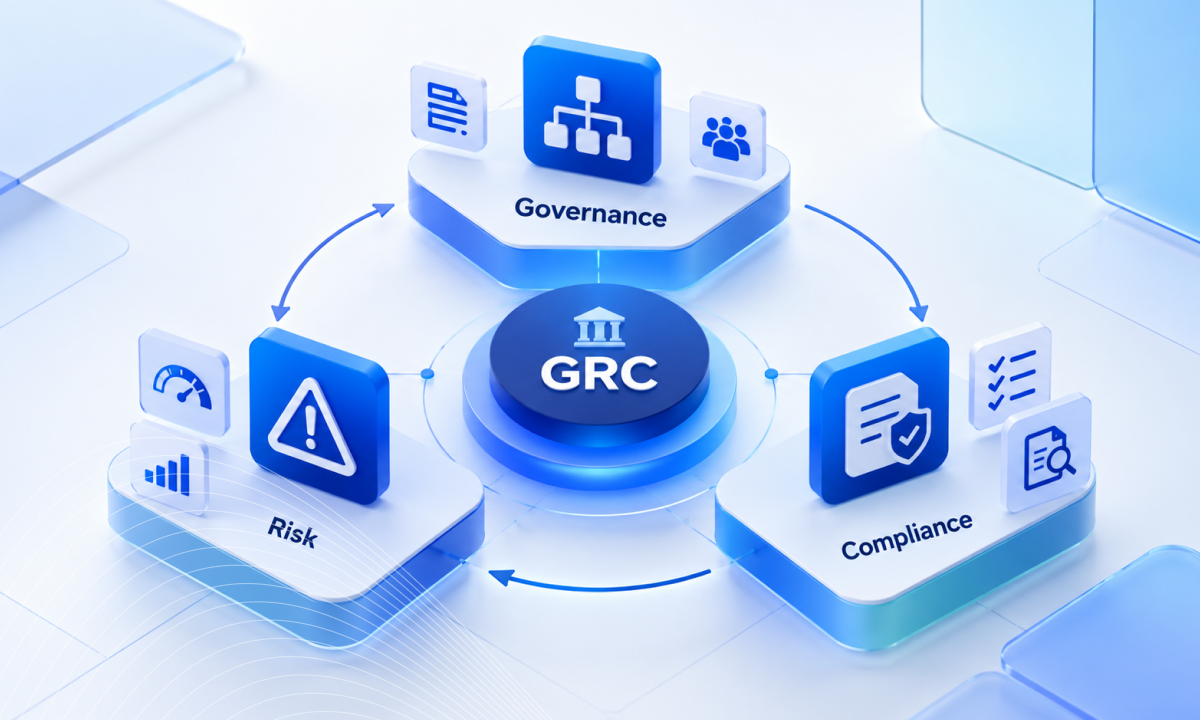
A GRC framework brings three core functions together:

  • Governance: Establishes business objectives, decision-making processes, and accountability.
  • Risk management: Identifies, assesses, and prioritizes risks that could affect business operations.
  • Compliance: Helps organizations meet applicable laws, regulations, contractual obligations, and internal policies.

By connecting these functions, a GRC framework helps teams apply controls consistently, track issues, and make informed decisions. Effective implementation also requires clear ownership and regular monitoring to ensure controls remain effective as business risks and requirements evolve.

‍

What's Your Biggest SaaS Blind Spot?

Uncover overlooked risks.
Get The Checklist

‍

2. Why Does Choosing the Right GRC Framework Matter?

Choosing the right GRC framework helps organizations align controls with business risks, meet applicable requirements, and establish clear accountability.

The right framework helps organizations:

  • Meet compliance requirements: Align policies and controls with applicable regulations, industry standards, and contractual obligations.
  • Prioritize business risks: Identify threats based on their potential impact and direct resources toward the most critical issues.
  • Establish accountability: Assign control owners and define responsibilities for reviews, approvals, and remediation.
  • Reduce duplicated work: Map overlapping requirements to shared controls where appropriate.
  • Maintain effective controls: Review performance and update processes as business needs, technology, and risks change.

For organizations managing extensive SaaS environments, this also means establishing oversight of applications, user access, and software-related risks. CloudEagle.ai supports this part of a broader GRC program through SaaS discovery and access governance.

‍

3. What Are the Most Common GRC Frameworks and Standards?

Different GRC frameworks address different business needs. Some focus on cybersecurity and information security, while others cover internal controls, IT governance, or enterprise risk management.

‍

Framework Primary focus Best suited for
NIST CSF 2.0 Cybersecurity risk management Organizations seeking a flexible approach to identifying and reducing cyber risks
ISO/IEC 27001 Information security management Organizations building an information security management system or pursuing certification
COSO Internal Control Framework Internal controls and reliable reporting Organizations focused on financial reporting and control effectiveness
COBIT Enterprise IT governance Organizations aligning IT processes and controls with business objectives
ISO 31000 Enterprise risk management Organizations managing risks across multiple business functions
SOC 2 Trust Services Criteria Controls related to security, availability, processing integrity, confidentiality, and privacy Service organizations responding to customer assurance requirements

‍

Which Framework Should You Choose?

These options serve different purposes. NIST CSF 2.0 supports cybersecurity risk management, COSO addresses internal control, and COBIT focuses on enterprise IT governance. ISO/IEC 27001 specifies requirements for an information security management system, while ISO 31000 provides risk management guidelines. 

SOC 2 is an attestation engagement based on the Trust Services Criteria, commonly used by service organizations to demonstrate controls to customers.

Organizations may use multiple frameworks or standards to meet different obligations. Mapping overlapping requirements to shared controls can reduce duplicated work, provided each requirement receives the appropriate implementation, testing, and evidence.

‍

4. How to Choose the Right GRC Framework

The right GRC framework depends on your regulatory obligations, business risks, existing controls, and available resources. Choosing one without evaluating these factors can lead to unnecessary documentation and controls that fail to address your actual exposure.

A. Identify Regulatory and Contractual Requirements

List the regulations, industry standards, and customer requirements that apply to your business. For example, a SaaS provider responding to enterprise customer assurance requirements may evaluate SOC 2, while an organization seeking formal information security certification may consider ISO/IEC 27001.

B. Prioritize Your Biggest Business Risks

Identify risks that could disrupt operations, expose sensitive data, or damage customer trust. Consider cyber threats, third-party exposure, excessive permissions, and unapproved AI tools. Your risk priorities should help determine which framework and controls deserve attention first.

C. Evaluate Existing Controls

Review current policies, access reviews, risk assessments, and audit findings. Map existing controls against the framework's requirements to identify what already works, what needs improvement, and what is missing. This prevents teams from rebuilding effective processes unnecessarily.

D. Assess Resources and Implementation Effort

Consider your team's expertise, budget, and capacity to maintain controls. Account for documentation, employee training, evidence collection, recurring reviews, and potential certification costs. The framework must be practical to implement and sustain.

E. Account for Overlapping Requirements

If you need multiple frameworks, identify requirements that can be supported by common controls. For example, a well-documented access review may support several requirements if its scope, approvals, frequency, and evidence meet each one.

Before selecting a framework, document your applicable requirements, highest-priority risks, existing control gaps, and implementation resources. This creates a clear starting point for the implementation process.

‍

One Missed Control Can Cost You

Strengthen your SaaS compliance.
Get The Checklist

‍

5. How to Implement a GRC Framework in 7 Steps

Implementing a GRC framework means translating requirements into working controls, assigning accountability, and tracking risks through resolution. These seven steps help organizations move from framework selection to consistent execution.

A. Define the Scope and Objectives

Identify which business units, systems, data, and processes the framework will cover. Set objectives based on applicable requirements and the risks that matter most to your organization.

  • Document regulatory, contractual, and business requirements.
  • Identify critical systems, sensitive data, and third-party dependencies.
  • Define measurable outcomes and obtain leadership approval.

B. Assign Roles and Control Owners

Assign clear responsibility for executing controls, approving exceptions, accepting risks, and resolving findings. Each control should have an accountable owner who understands the required activity and evidence.

  • Assign owners to individual controls and remediation tasks.
  • Define approval authority and escalation procedures.
  • Establish review responsibilities across IT, security, compliance, and business teams.

C. Assess Existing Controls and Identify Gaps

Compare current practices against the selected framework's requirements. Review actual control records, not just documented policies, to determine whether controls operate as intended.

  • Review policies, audit findings, risk assessments, and control records.
  • Classify gaps as missing controls, ineffective execution, or insufficient evidence.
  • Document the risk, impact, and corrective action for each gap.

D. Map Requirements to Policies and Controls

Connect each applicable requirement to the policies, procedures, and controls used to address it. This creates a clear record of how the organization meets its obligations.

  • Create a control matrix linking requirements to controls and owners.
  • Document review frequency and evidence requirements.
  • Map overlapping requirements to shared controls where appropriate, while retaining framework-specific evidence.

E. Prioritize and Remediate Gaps

Address control gaps according to their potential impact, likelihood, and regulatory significance. Prioritization helps teams focus resources on the risks that require the most urgent attention.

  • Rank findings by severity and business impact.
  • Assign remediation owners, deadlines, and escalation paths.
  • Verify that corrective actions resolve the underlying issue.

F. Establish Evidence Collection and Reporting

Define how teams will demonstrate that controls operate as required. Consistent evidence collection improves traceability and reduces the effort involved in audits and compliance reviews.

  • Specify the evidence required for each control and reporting period.
  • Standardize record storage, review procedures, and reporting.
  • Automate recurring evidence collection and reminders where practical.

G. Monitor Controls and Improve the Framework

Review control performance regularly and update processes when risks or requirements change. Implementation is an ongoing responsibility, not a one-time compliance exercise.

  • Track control failures, overdue remediation, and recurring audit findings.
  • Reassess risks after significant regulatory, business, or technology changes.
  • Update controls and verify that corrective actions remain effective.

For organizations managing extensive SaaS environments, monitoring should also cover application visibility, ownership, and user permissions. CloudEagle.ai supports this part of a broader GRC program through SaaS discovery and access governance.

‍

6. How Do You Measure GRC Framework Effectiveness?

A GRC framework is effective when it helps an organization maintain reliable controls, reduce risk exposure, and meet compliance requirements. Passing an audit alone does not prove effectiveness. Organizations must track control performance, unresolved risks, and the timely completion of corrective actions.

The following metrics help evaluate GRC performance and identify areas that need improvement.

A. Control Effectiveness Rate

Measure the percentage of tested controls that meet their defined requirements.

  • What to track: Controls passing tests, recurring failures, and critical control gaps.
  • How to use it: Calculate the percentage of controls that pass testing. Investigate failures to identify weaknesses in control design, execution, or ownership.

B. Risk Remediation Time

Track how quickly teams resolve identified risks and control deficiencies.

  • What to track: Open risks by severity, overdue actions, and recurring findings.
  • How to use it: Set risk-based deadlines, assign owners, and verify that corrective actions address the underlying issue before closing findings.

C. Compliance and Audit Readiness

Assess whether the organization can provide complete, current evidence that its controls meet applicable requirements.

  • What to track: Missing evidence, overdue reviews, repeat audit findings, and audit preparation time.
  • How to use it: Standardize evidence collection and address gaps before audits or compliance assessments.

D. Risk Exposure and Policy Exceptions

Monitor whether significant risks remain within the organization's defined risk tolerance.

  • What to track: Residual risk, high-severity findings, policy exceptions, third-party risks, and excessive user permissions.
  • How to use it: Escalate risks that exceed approved thresholds and review exceptions to ensure they have appropriate approval, ownership, and expiry dates.

E. Control Coverage Across Frameworks

Evaluate whether applicable requirements across multiple frameworks are mapped to effective controls.

  • What to track: Unmapped requirements, control gaps, missing evidence, and overlapping controls.
  • How to use it: Maintain a control matrix linking requirements to controls, owners, testing schedules, and evidence. Reuse controls where appropriate without overlooking framework-specific requirements.

‍

7. Build a GRC Performance Dashboard

A GRC dashboard should bring control effectiveness, risk exposure, compliance status, and remediation progress into one reporting view. This helps leadership prioritize corrective actions and allocate resources based on actual risk.

For example, overdue access reviews combined with excessive user permissions may indicate weaknesses in access governance. Teams should identify affected applications, remove unnecessary access, and verify that corrective actions are effective.

Organizations with extensive SaaS and AI environments should also monitor application visibility, access permissions, and ownership. CloudEagle.ai supports this part of a broader GRC program through SaaS security and compliance and access governance capabilities.

Measure effectiveness consistently against established baselines and risk-based targets. The goal is to demonstrate stronger controls, reduced exposure to priority risks, and timely remediation rather than simply completing compliance activities.

‍

8. How Does Technology Support GRC Framework Implementation?

GRC technology connects framework requirements with control execution, evidence collection, risk tracking, and remediation. Without integrated workflows, teams often rely on spreadsheets and email approvals, making it difficult to trace requirements to control or confirm whether identified gaps have been resolved.

The right technology should support these five activities.

A. Connect Requirements to Controls

Maintain a centralized record of applicable requirements, policies, controls, owners, and supporting evidence. Linking these elements helps teams identify uncovered requirements, track control responsibilities, and reduce duplicate work across frameworks.

B. Automate Control Workflows and Evidence Collection

Automate recurring assessments, approval requests, evidence reminders, and review schedules. Automation reduces manual follow-ups, while validation ensures that collected evidence is complete and controls operate as intended.

C. Link Risk Findings to Verified Remediation

Connect each finding to its severity, accountable owner, deadline, and corrective action. For example, when a control test identifies excessive permissions, the workflow should assign remediation, track the access change, and record evidence confirming that the issue has been resolved.

D. Improve Risk Reporting and Audit Readiness

Consolidate control failures, overdue remediation, evidence gaps, and risk trends into reports that support timely decisions. Effective reporting distinguishes completed activities from verified outcomes, helping leadership understand whether risk exposure is actually decreasing.

E. Extend Visibility to SaaS and AI Risks

Organizations also need visibility into applications, user access, and AI tools operating across their environments. Gaps in this visibility can make it harder to identify unauthorized applications, excessive permissions, and potential compliance issues.

For organizations with extensive SaaS and AI environments, technology should also provide visibility into application usage, user permissions, and security posture. This helps teams identify unapproved tools, excessive privileges, and potential control gaps that require investigation.

Choose technology based on the controls you need to operate, the evidence you must retain, and the systems it must integrate with. Automation should make control execution and verification more reliable, not simply reduce administrative work.

‍

9. How CloudEagle.ai Supports GRC Framework Implementation

CloudEagle.ai supports the SaaS governance and access control components of GRC by helping organizations discover applications, review permissions, and improve oversight of software-related risks.

  • Identify shadow IT and shadow AI: Discover applications operating outside established IT oversight so teams can review unapproved tools and assess potential security or compliance risks.
  • Strengthen access governance: Automate access reviews and flag excessive privileges, dormant accounts, and access that no longer matches an employee’s role. This helps teams investigate and remediate access-related control gaps.
  • Improve compliance evidence: Capture evidence of access reviews and access changes to support audit preparation and access-control requirements.

CloudEagle.ai complements a broader GRC program rather than replacing a full-suite GRC platform. It helps address SaaS visibility and access governance while organizations manage enterprise-wide risk assessments, regulatory obligations, and other compliance requirements through their wider GRC processes.

‍

‍

10. Conclusion

The right GRC framework helps organizations manage risk, strengthen security, and meet compliance requirements. But lasting results depend on how effectively teams implement controls, monitor risks, and govern SaaS applications, AI tools, and user access.

CloudEagle.ai helps organizations improve visibility and governance across SaaS, AI, and identities, making it easier to identify risks, enforce policies, and manage access.

Book a demo with CloudEagle.ai to see how you can strengthen governance and simplify risk management across your organization.

‍

11. Frequently Asked Questions

1. Is a GRC framework mandatory for every organization?

A GRC framework is not universally mandatory. However, specific regulations, industry standards, contractual obligations, and customer requirements may require organizations to implement defined governance, risk management, and compliance controls. Applicable requirements depend on the organization's industry, location, and business activities.

2. What is the difference between a GRC framework and a GRC platform?

A GRC framework defines the principles, policies, controls, and processes used to manage governance, risk, and compliance. A GRC platform is software that helps teams manage these activities through workflows, documentation, reporting, and evidence tracking.

3. Who is responsible for maintaining a GRC framework?

Responsibility is shared across leadership, risk and compliance teams, IT, security, legal, and relevant business units. Executive leadership provides oversight, while designated control owners maintain individual controls. A program owner coordinates reviews, tracks gaps, and ensures accountability.

4. How often should an organization review its GRC framework?

Organizations should review their GRC framework at planned intervals and whenever significant changes affect their risks or obligations. Triggers include new regulations, security incidents, major technology changes, acquisitions, and audit findings.

5. Which GRC framework should an organization choose?

The right GRC framework depends on the organization's risks, regulatory obligations, and business objectives. NIST CSF 2.0 supports cybersecurity risk management, ISO/IEC 27001 supports information security management, COSO focuses on internal controls, COBIT addresses IT governance, and ISO 31000 provides broader risk management guidelines. Service organizations may also need SOC 2 to address customer assurance requirements

‍

Advertisement for a SaaS Subscription Tracking Template with a call-to-action button to download and a partial graphic of a tablet showing charts.Banner promoting a SaaS Agreement Checklist to streamline SaaS management and avoid budget waste with a call-to-action button labeled Download checklist.Blue banner with text 'The Ultimate Employee Offboarding Checklist!' and a black button labeled 'Download checklist' alongside partial views of checklist documents from cloudeagle.ai.Digital ad for download checklist titled 'The Ultimate Checklist for IT Leaders to Optimize SaaS Operations' by cloudeagle.ai, showing checklist pages.Slack Buyer's Guide offer with text 'Unlock insider insights to get the best deal on Slack!' and a button labeled 'Get Your Copy', accompanied by a preview of the guide featuring Slack's logo.Monday Pricing Guide by cloudeagle.ai offering exclusive pricing secrets to maximize investment with a call-to-action button labeled Get Your Copy and an image of the guide's cover.Blue banner for Canva Pricing Guide by cloudeagle.ai offering a guide to Canva costs, features, and alternatives with a call-to-action button saying Get Your Copy.Blue banner with white text reading 'Little-Known Negotiation Hacks to Get the Best Deal on Slack' and a white button labeled 'Get Your Copy'.Blue banner with text 'Little-Known Negotiation Hacks to Get the Best Deal on Monday.com' and a white button labeled 'Get Your Copy'.Blue banner with text 'Little-Known Negotiation Hacks to Get the Best Deal on Canva' and a white button labeled 'Get Your Copy'.Banner with text 'Slack Buyer's Guide' and a 'Download Now' button next to images of a guide titled 'Slack Buyer’s Guide: Features, Pricing & Best Practices'.Digital cover of Monday Pricing Guide with a button labeled Get Your Copy on a blue background.Canva Pricing Guide cover with a button labeled Get Your Copy on a blue gradient background.

Enter your email to
unlock the report

Oops! Something went wrong while submitting the form.
License Count
Benchmark
Per User/Per Year

Enter your email to
unlock the report

Oops! Something went wrong while submitting the form.
License Count
Benchmark
Per User/Per Year

Enter your email to
unlock the report

Oops! Something went wrong while submitting the form.
Notion Plus
License Count
Benchmark
Per User/Per Year
100-500
$67.20 - $78.72
500-1000
$59.52 - $72.00
1000+
$51.84 - $57.60
Canva Pro
License Count
Benchmark
Per User/Per Year
100-500
$74.33-$88.71
500-1000
$64.74-$80.32
1000+
$55.14-$62.34

Enter your email to
unlock the report

Oops! Something went wrong while submitting the form.

Enter your email to
unlock the report

Oops! Something went wrong while submitting the form.
Zoom Business
License Count
Benchmark
Per User/Per Year
100-500
$216.00 - $264.00
500-1000
$180.00 - $216.00
1000+
$156.00 - $180.00

Enter your email to
unlock the report

Oops! Something went wrong while submitting the form.

Get the Right Security Platform To Secure Your Cloud Infrastructure

Please enter a business email
Thank you!
The 2023 SaaS report has been sent to your email. Check your promotional or spam folder.
Oops! Something went wrong while submitting the form.

Access full report

Please enter a business email
Thank you!
The 2023 SaaS report has been sent to your email. Check your promotional or spam folder.
Oops! Something went wrong while submitting the form.
  • A GRC framework connects governance, risk management, and compliance through defined policies, controls, and responsibilities.
  • Common frameworks include NIST CSF 2.0, ISO 27001, COSO, COBIT, ISO 31000, and SOC 2.
  • Successful implementation requires clear ownership, control mapping, risk-based remediation, evidence collection, and continuous monitoring.
  • Organizations should measure control effectiveness, remediation time, audit readiness, risk exposure, and control coverage.
  • CloudEagle.ai supports GRC implementation through SaaS discovery, shadow IT and AI detection, access governance, and audit-ready access evidence.

‍

Organizations face growing cybersecurity, regulatory, third-party, and AI risks, but disconnected policies and compliance processes make it difficult to assess overall risk.

According to Grant Thornton’s 2026 Cyber & Risk Survey, 67% of business leaders prioritize enterprise risk management and governance, yet only 48% have an integrated approach.

A GRC framework connects governance, risk management, and compliance through clear responsibilities and consistent controls. This guide compares common frameworks and explains how to choose and implement one, with a focus on SaaS, AI, and access governance.

‍

1. What Is a GRC Framework?

A governance, risk, and compliance (GRC) framework is a structured approach that helps organizations align business objectives, manage risks, and meet regulatory and internal requirements through defined policies, controls, and responsibilities.

A GRC framework brings three core functions together:

  • Governance: Establishes business objectives, decision-making processes, and accountability.
  • Risk management: Identifies, assesses, and prioritizes risks that could affect business operations.
  • Compliance: Helps organizations meet applicable laws, regulations, contractual obligations, and internal policies.

By connecting these functions, a GRC framework helps teams apply controls consistently, track issues, and make informed decisions. Effective implementation also requires clear ownership and regular monitoring to ensure controls remain effective as business risks and requirements evolve.

‍

What's Your Biggest SaaS Blind Spot?

Uncover overlooked risks.
Get The Checklist

‍

2. Why Does Choosing the Right GRC Framework Matter?

Choosing the right GRC framework helps organizations align controls with business risks, meet applicable requirements, and establish clear accountability.

The right framework helps organizations:

  • Meet compliance requirements: Align policies and controls with applicable regulations, industry standards, and contractual obligations.
  • Prioritize business risks: Identify threats based on their potential impact and direct resources toward the most critical issues.
  • Establish accountability: Assign control owners and define responsibilities for reviews, approvals, and remediation.
  • Reduce duplicated work: Map overlapping requirements to shared controls where appropriate.
  • Maintain effective controls: Review performance and update processes as business needs, technology, and risks change.

For organizations managing extensive SaaS environments, this also means establishing oversight of applications, user access, and software-related risks. CloudEagle.ai supports this part of a broader GRC program through SaaS discovery and access governance.

‍

3. What Are the Most Common GRC Frameworks and Standards?

Different GRC frameworks address different business needs. Some focus on cybersecurity and information security, while others cover internal controls, IT governance, or enterprise risk management.

‍

Framework Primary focus Best suited for
NIST CSF 2.0 Cybersecurity risk management Organizations seeking a flexible approach to identifying and reducing cyber risks
ISO/IEC 27001 Information security management Organizations building an information security management system or pursuing certification
COSO Internal Control Framework Internal controls and reliable reporting Organizations focused on financial reporting and control effectiveness
COBIT Enterprise IT governance Organizations aligning IT processes and controls with business objectives
ISO 31000 Enterprise risk management Organizations managing risks across multiple business functions
SOC 2 Trust Services Criteria Controls related to security, availability, processing integrity, confidentiality, and privacy Service organizations responding to customer assurance requirements

‍

Which Framework Should You Choose?

These options serve different purposes. NIST CSF 2.0 supports cybersecurity risk management, COSO addresses internal control, and COBIT focuses on enterprise IT governance. ISO/IEC 27001 specifies requirements for an information security management system, while ISO 31000 provides risk management guidelines. 

SOC 2 is an attestation engagement based on the Trust Services Criteria, commonly used by service organizations to demonstrate controls to customers.

Organizations may use multiple frameworks or standards to meet different obligations. Mapping overlapping requirements to shared controls can reduce duplicated work, provided each requirement receives the appropriate implementation, testing, and evidence.

‍

4. How to Choose the Right GRC Framework

The right GRC framework depends on your regulatory obligations, business risks, existing controls, and available resources. Choosing one without evaluating these factors can lead to unnecessary documentation and controls that fail to address your actual exposure.

A. Identify Regulatory and Contractual Requirements

List the regulations, industry standards, and customer requirements that apply to your business. For example, a SaaS provider responding to enterprise customer assurance requirements may evaluate SOC 2, while an organization seeking formal information security certification may consider ISO/IEC 27001.

B. Prioritize Your Biggest Business Risks

Identify risks that could disrupt operations, expose sensitive data, or damage customer trust. Consider cyber threats, third-party exposure, excessive permissions, and unapproved AI tools. Your risk priorities should help determine which framework and controls deserve attention first.

C. Evaluate Existing Controls

Review current policies, access reviews, risk assessments, and audit findings. Map existing controls against the framework's requirements to identify what already works, what needs improvement, and what is missing. This prevents teams from rebuilding effective processes unnecessarily.

D. Assess Resources and Implementation Effort

Consider your team's expertise, budget, and capacity to maintain controls. Account for documentation, employee training, evidence collection, recurring reviews, and potential certification costs. The framework must be practical to implement and sustain.

E. Account for Overlapping Requirements

If you need multiple frameworks, identify requirements that can be supported by common controls. For example, a well-documented access review may support several requirements if its scope, approvals, frequency, and evidence meet each one.

Before selecting a framework, document your applicable requirements, highest-priority risks, existing control gaps, and implementation resources. This creates a clear starting point for the implementation process.

‍

One Missed Control Can Cost You

Strengthen your SaaS compliance.
Get The Checklist

‍

5. How to Implement a GRC Framework in 7 Steps

Implementing a GRC framework means translating requirements into working controls, assigning accountability, and tracking risks through resolution. These seven steps help organizations move from framework selection to consistent execution.

A. Define the Scope and Objectives

Identify which business units, systems, data, and processes the framework will cover. Set objectives based on applicable requirements and the risks that matter most to your organization.

  • Document regulatory, contractual, and business requirements.
  • Identify critical systems, sensitive data, and third-party dependencies.
  • Define measurable outcomes and obtain leadership approval.

B. Assign Roles and Control Owners

Assign clear responsibility for executing controls, approving exceptions, accepting risks, and resolving findings. Each control should have an accountable owner who understands the required activity and evidence.

  • Assign owners to individual controls and remediation tasks.
  • Define approval authority and escalation procedures.
  • Establish review responsibilities across IT, security, compliance, and business teams.

C. Assess Existing Controls and Identify Gaps

Compare current practices against the selected framework's requirements. Review actual control records, not just documented policies, to determine whether controls operate as intended.

  • Review policies, audit findings, risk assessments, and control records.
  • Classify gaps as missing controls, ineffective execution, or insufficient evidence.
  • Document the risk, impact, and corrective action for each gap.

D. Map Requirements to Policies and Controls

Connect each applicable requirement to the policies, procedures, and controls used to address it. This creates a clear record of how the organization meets its obligations.

  • Create a control matrix linking requirements to controls and owners.
  • Document review frequency and evidence requirements.
  • Map overlapping requirements to shared controls where appropriate, while retaining framework-specific evidence.

E. Prioritize and Remediate Gaps

Address control gaps according to their potential impact, likelihood, and regulatory significance. Prioritization helps teams focus resources on the risks that require the most urgent attention.

  • Rank findings by severity and business impact.
  • Assign remediation owners, deadlines, and escalation paths.
  • Verify that corrective actions resolve the underlying issue.

F. Establish Evidence Collection and Reporting

Define how teams will demonstrate that controls operate as required. Consistent evidence collection improves traceability and reduces the effort involved in audits and compliance reviews.

  • Specify the evidence required for each control and reporting period.
  • Standardize record storage, review procedures, and reporting.
  • Automate recurring evidence collection and reminders where practical.

G. Monitor Controls and Improve the Framework

Review control performance regularly and update processes when risks or requirements change. Implementation is an ongoing responsibility, not a one-time compliance exercise.

  • Track control failures, overdue remediation, and recurring audit findings.
  • Reassess risks after significant regulatory, business, or technology changes.
  • Update controls and verify that corrective actions remain effective.

For organizations managing extensive SaaS environments, monitoring should also cover application visibility, ownership, and user permissions. CloudEagle.ai supports this part of a broader GRC program through SaaS discovery and access governance.

‍

6. How Do You Measure GRC Framework Effectiveness?

A GRC framework is effective when it helps an organization maintain reliable controls, reduce risk exposure, and meet compliance requirements. Passing an audit alone does not prove effectiveness. Organizations must track control performance, unresolved risks, and the timely completion of corrective actions.

The following metrics help evaluate GRC performance and identify areas that need improvement.

A. Control Effectiveness Rate

Measure the percentage of tested controls that meet their defined requirements.

  • What to track: Controls passing tests, recurring failures, and critical control gaps.
  • How to use it: Calculate the percentage of controls that pass testing. Investigate failures to identify weaknesses in control design, execution, or ownership.

B. Risk Remediation Time

Track how quickly teams resolve identified risks and control deficiencies.

  • What to track: Open risks by severity, overdue actions, and recurring findings.
  • How to use it: Set risk-based deadlines, assign owners, and verify that corrective actions address the underlying issue before closing findings.

C. Compliance and Audit Readiness

Assess whether the organization can provide complete, current evidence that its controls meet applicable requirements.

  • What to track: Missing evidence, overdue reviews, repeat audit findings, and audit preparation time.
  • How to use it: Standardize evidence collection and address gaps before audits or compliance assessments.

D. Risk Exposure and Policy Exceptions

Monitor whether significant risks remain within the organization's defined risk tolerance.

  • What to track: Residual risk, high-severity findings, policy exceptions, third-party risks, and excessive user permissions.
  • How to use it: Escalate risks that exceed approved thresholds and review exceptions to ensure they have appropriate approval, ownership, and expiry dates.

E. Control Coverage Across Frameworks

Evaluate whether applicable requirements across multiple frameworks are mapped to effective controls.

  • What to track: Unmapped requirements, control gaps, missing evidence, and overlapping controls.
  • How to use it: Maintain a control matrix linking requirements to controls, owners, testing schedules, and evidence. Reuse controls where appropriate without overlooking framework-specific requirements.

‍

7. Build a GRC Performance Dashboard

A GRC dashboard should bring control effectiveness, risk exposure, compliance status, and remediation progress into one reporting view. This helps leadership prioritize corrective actions and allocate resources based on actual risk.

For example, overdue access reviews combined with excessive user permissions may indicate weaknesses in access governance. Teams should identify affected applications, remove unnecessary access, and verify that corrective actions are effective.

Organizations with extensive SaaS and AI environments should also monitor application visibility, access permissions, and ownership. CloudEagle.ai supports this part of a broader GRC program through SaaS security and compliance and access governance capabilities.

Measure effectiveness consistently against established baselines and risk-based targets. The goal is to demonstrate stronger controls, reduced exposure to priority risks, and timely remediation rather than simply completing compliance activities.

‍

8. How Does Technology Support GRC Framework Implementation?

GRC technology connects framework requirements with control execution, evidence collection, risk tracking, and remediation. Without integrated workflows, teams often rely on spreadsheets and email approvals, making it difficult to trace requirements to control or confirm whether identified gaps have been resolved.

The right technology should support these five activities.

A. Connect Requirements to Controls

Maintain a centralized record of applicable requirements, policies, controls, owners, and supporting evidence. Linking these elements helps teams identify uncovered requirements, track control responsibilities, and reduce duplicate work across frameworks.

B. Automate Control Workflows and Evidence Collection

Automate recurring assessments, approval requests, evidence reminders, and review schedules. Automation reduces manual follow-ups, while validation ensures that collected evidence is complete and controls operate as intended.

C. Link Risk Findings to Verified Remediation

Connect each finding to its severity, accountable owner, deadline, and corrective action. For example, when a control test identifies excessive permissions, the workflow should assign remediation, track the access change, and record evidence confirming that the issue has been resolved.

D. Improve Risk Reporting and Audit Readiness

Consolidate control failures, overdue remediation, evidence gaps, and risk trends into reports that support timely decisions. Effective reporting distinguishes completed activities from verified outcomes, helping leadership understand whether risk exposure is actually decreasing.

E. Extend Visibility to SaaS and AI Risks

Organizations also need visibility into applications, user access, and AI tools operating across their environments. Gaps in this visibility can make it harder to identify unauthorized applications, excessive permissions, and potential compliance issues.

For organizations with extensive SaaS and AI environments, technology should also provide visibility into application usage, user permissions, and security posture. This helps teams identify unapproved tools, excessive privileges, and potential control gaps that require investigation.

Choose technology based on the controls you need to operate, the evidence you must retain, and the systems it must integrate with. Automation should make control execution and verification more reliable, not simply reduce administrative work.

‍

9. How CloudEagle.ai Supports GRC Framework Implementation

CloudEagle.ai supports the SaaS governance and access control components of GRC by helping organizations discover applications, review permissions, and improve oversight of software-related risks.

  • Identify shadow IT and shadow AI: Discover applications operating outside established IT oversight so teams can review unapproved tools and assess potential security or compliance risks.
  • Strengthen access governance: Automate access reviews and flag excessive privileges, dormant accounts, and access that no longer matches an employee’s role. This helps teams investigate and remediate access-related control gaps.
  • Improve compliance evidence: Capture evidence of access reviews and access changes to support audit preparation and access-control requirements.

CloudEagle.ai complements a broader GRC program rather than replacing a full-suite GRC platform. It helps address SaaS visibility and access governance while organizations manage enterprise-wide risk assessments, regulatory obligations, and other compliance requirements through their wider GRC processes.

‍

‍

10. Conclusion

The right GRC framework helps organizations manage risk, strengthen security, and meet compliance requirements. But lasting results depend on how effectively teams implement controls, monitor risks, and govern SaaS applications, AI tools, and user access.

CloudEagle.ai helps organizations improve visibility and governance across SaaS, AI, and identities, making it easier to identify risks, enforce policies, and manage access.

Book a demo with CloudEagle.ai to see how you can strengthen governance and simplify risk management across your organization.

‍

11. Frequently Asked Questions

1. Is a GRC framework mandatory for every organization?

A GRC framework is not universally mandatory. However, specific regulations, industry standards, contractual obligations, and customer requirements may require organizations to implement defined governance, risk management, and compliance controls. Applicable requirements depend on the organization's industry, location, and business activities.

2. What is the difference between a GRC framework and a GRC platform?

A GRC framework defines the principles, policies, controls, and processes used to manage governance, risk, and compliance. A GRC platform is software that helps teams manage these activities through workflows, documentation, reporting, and evidence tracking.

3. Who is responsible for maintaining a GRC framework?

Responsibility is shared across leadership, risk and compliance teams, IT, security, legal, and relevant business units. Executive leadership provides oversight, while designated control owners maintain individual controls. A program owner coordinates reviews, tracks gaps, and ensures accountability.

4. How often should an organization review its GRC framework?

Organizations should review their GRC framework at planned intervals and whenever significant changes affect their risks or obligations. Triggers include new regulations, security incidents, major technology changes, acquisitions, and audit findings.

5. Which GRC framework should an organization choose?

The right GRC framework depends on the organization's risks, regulatory obligations, and business objectives. NIST CSF 2.0 supports cybersecurity risk management, ISO/IEC 27001 supports information security management, COSO focuses on internal controls, COBIT addresses IT governance, and ISO 31000 provides broader risk management guidelines. Service organizations may also need SOC 2 to address customer assurance requirements

‍

CloudEagle.ai recognized in the 2025 Gartner® Magic Quadrant™ for SaaS Management Platforms
Download now
gartner chart
5x
Faster employee
onboarding
80%
Reduction in time for
user access reviews
30k
Workflows
automated
$15Bn
Analyzed in
contract spend
$2Bn
Saved in
SaaS spend

Streamline SaaS governance and save 10-30%

Book a Demo with Expert
CTA image