223 AI Data Policy Violations Per Month: The Netskope 2026 Number Enterprises Can't Ignore

%201.svg)


Enterprise AI adoption is accelerating, but so are the risks that come with it.
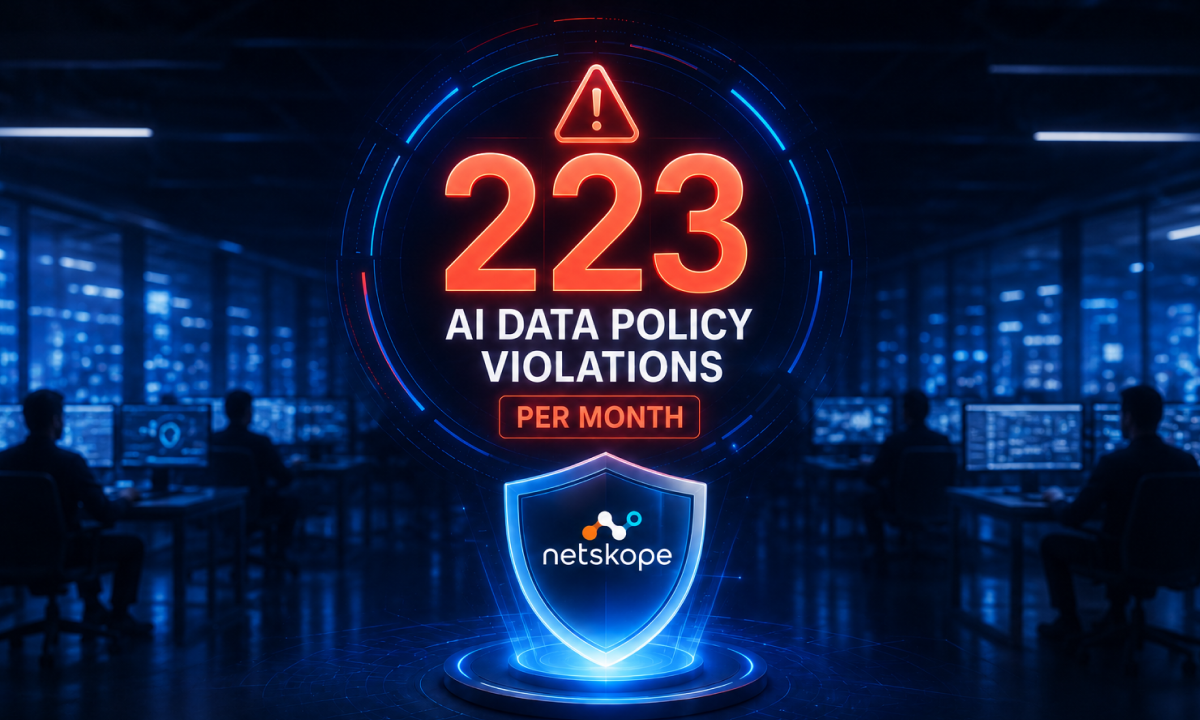
According to the latest Netskope Cloud and Threat Report 2026, the average organization now records 223 generative AI-related data policy violations every month.
At the same time, AI adoption continues to surge, with the number of enterprise AI users tripling over the past year and prompt volumes increasing sixfold.
AI Adoption Is Outpacing AI Governance
The report highlights a growing gap between AI adoption and security readiness.
Nearly 47% of generative AI users still rely on personal AI applications, creating "shadow AI" environments where IT teams have little visibility into what data employees are sharing.
Meanwhile, only half of organizations have enforceable data protection policies for generative AI, suggesting many data exposures may go undetected.
This trend mirrors the broader enterprise AI landscape in 2026. As organizations expand their use of ChatGPT, Claude, Gemini, GitHub Copilot, and AI agents, security teams are shifting their focus from blocking AI tools to governing how data moves through them.
Source Code and Sensitive Data Lead Policy Violations
The report found that source code accounted for 42% of AI-related policy violations, followed by regulated data (32%) and intellectual property (16%).
These incidents often occur when employees upload internal documents, code repositories, or sensitive records into AI applications without realizing the security implications.
Netskope also warns that the rapid adoption of AI browsers, Model Context Protocol (MCP) servers, and autonomous AI agents is expanding the enterprise attack surface.
These technologies introduce new pathways for data exposure, making continuous monitoring and policy enforcement increasingly important.
What It Means for Enterprises
The report signals that AI governance is entering a new phase. Counting AI applications is no longer enough. Organizations also need visibility into what data reaches AI tools, who is using personal AI accounts, and how AI agents interact with enterprise systems.
As AI becomes part of everyday business operations, enterprises are increasingly investing in AI discovery, data loss prevention, and runtime governance.
Platforms like CloudEagle.ai help security teams identify shadow AI, monitor AI usage, and enforce policies before sensitive data leaves approved environments.

Get Our CloudEagle Newsletter
Let the headlines come straight to you with Access Granted — a monthly edition of Okta announcements, expert perspectives, analysis, and more.