The $735 Problem: Why Enterprise AI Governance is Set Up to Fail

%201.svg)
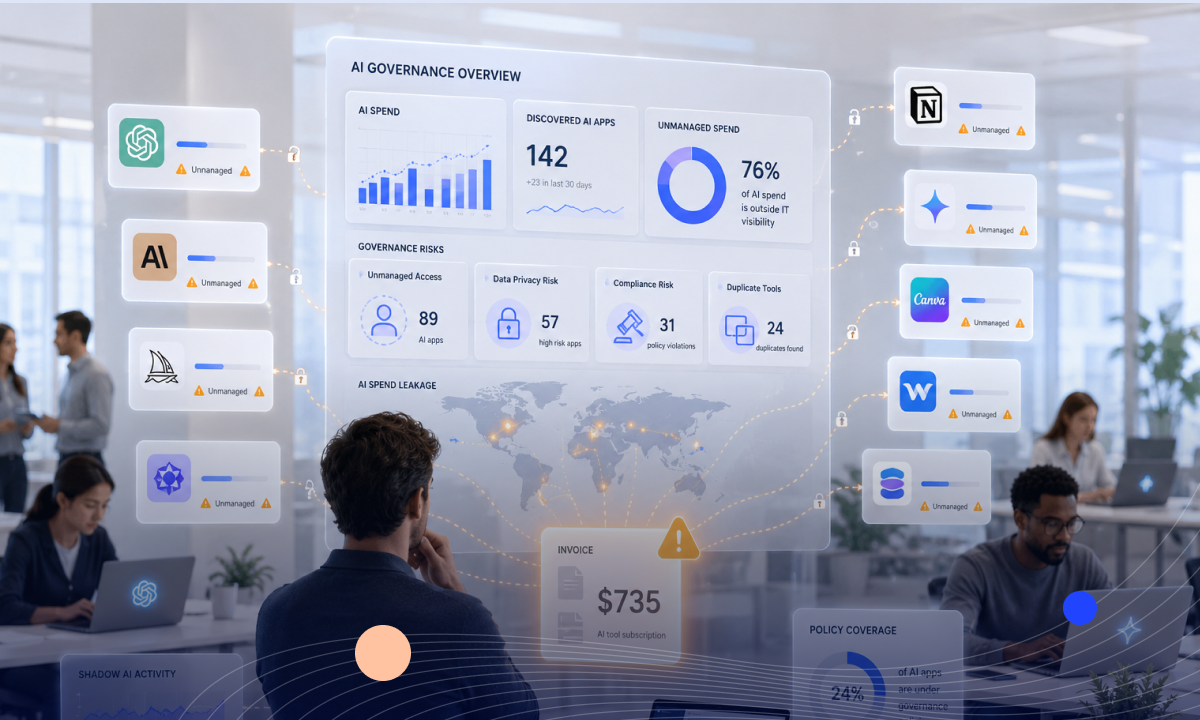


The number comes from Speakeasy's 2026 AI governance analysis, sourced against IBM's Cost of a Data Breach Report: for every $1 enterprises spend on AI security, they spend $735 on AI capability.
In March 2026, an in-house agent at Meta posted incorrect technical information publicly without human approval and triggered two hours of unauthorized data exposure, accessible to employees not cleared to view it. It was the second agent control failure at the company within weeks.
The pattern is consistent across the industry:
- 63% of organizations cannot enforce purpose limitations on their AI agents
- 60% cannot terminate a misbehaving agent once it is running
- 65% of enterprises with deployed AI agents experienced a confirmed security incident by April 2026
- 62% of organizations cite security and risk as the primary barrier to scaling agentic AI, outranking technical limitations and budget by 24 percentage points
That last number is from Stanford's 2026 AI Index. The bottleneck to enterprise AI is no longer model capability or cost. It is governance.
Why the gap keeps widening
The investment mismatch is structural, not accidental. Enterprise budgets in 2026 allocate 30 to 40% of AI spend to software and SaaS tools, 20 to 25% to cloud infrastructure, and only 8 to 12% to governance and security combined.
The EY agentic AI cost analysis puts a finer point on the problem. A customer service interaction that cost $0.04 in 2023 now costs $1.20 in 2026, a 30x increase driven by orchestration, tool retrieval, and iterative reasoning loops.
Token costs are only one part of that total. Infrastructure, governance, change management, and risk controls compound on top. Most finance teams are still pricing AI like 2023.
Regulatory pressure is now compressing the timeline to act. The EU AI Act's full enforcement provisions for high-risk AI systems take effect August 2, 2026, covering credit scoring, employment, and insurance underwriting.
Fines reach 15 million euros or 3% of global annual turnover. Forrester predicts 60% of Fortune 100 companies will appoint a dedicated head of AI governance in 2026. Sony, Bank of America, and UBS have already done so.
What governance-first actually looks like
JPMorgan Chase runs 450+ AI use cases daily across a platform deployed to more than 200,000 employees. Its $1.8 billion AI investment was built governance-first, with a C-suite oversight council and compliance embedded from the start.
Goldman Sachs runs every model through its Model Risk Management framework, with bias detection, data lineage tracking, and human-in-the-loop controls across all regulated operations. Both deployed AI to every employee. In both cases, governance was what made that scale possible.
CloudEagle.ai provides continuous discovery of sanctioned and unsanctioned AI tools, usage-based token consumption tracking, and policy enforcement including blocking access to unauthorized AI applications.

Get Our CloudEagle Newsletter
Let the headlines come straight to you with Access Granted — a monthly edition of Okta announcements, expert perspectives, analysis, and more.