You need to enable JavaScript in order to use the AI chatbot tool powered by ChatBot

Master Service Agreement Checklist: Free Checklist Inside

Share via:
blog-cms-banner-bg
Little-Known Negotiation Hacks to Get the Best Deal on Slack
cta-bg-blogDownload Your Copy

HIPAA Compliance Checklist for 2025

Download PDF

You're wasting 25% of your SaaS budget on unused licenses.

IT teams are using this guide to identify, reclaim, and prevent license waste across entire stack.

Download Free eBook
CTA Thumbnail

Did you ever sign a vendor contract you thought was airtight, only to discover surprise fees, hidden liabilities, or missing protections later?

It happens more often than teams realize. In fact, companies lose 8.6%–9.2% of their annual revenue due to poor contract management and overlooked terms. A big part of that comes from MSAs that weren’t reviewed carefully enough.

An MSA explains how you and a vendor will work together. But these documents can be long and confusing, which makes it easy to miss important details. Using an MSA checklist helps you spot red flags quickly and ensures nothing important gets overlooked.

Let’s explore an MSA checklist and how CloudEagle.ai helps automate contract reviews and flag risks.

TL;DR

  • An MSA outlines rules, responsibilities, service terms, pricing, data rights, and legal protections between businesses.
  • A standardized Master Service Agreement checklist helps organizations catch risks early, avoid surprises, and ensure consistent contract evaluation.
  • Key MSA components include scope of work, SLAs, pricing terms, IP ownership, data protection, liability limits, dispute resolution, and termination clauses.
  • Red flags include auto-renewals, vague SLAs, unlimited liability, unclear data ownership, and weak security provisions.
  • CloudEagle.ai automates MSA reviews using AI to detect risks, validate vendor compliance, and accelerate contract approvals.

What Is a Master Service Agreement (MSA)?

A Master Service Agreement (MSA) is a contract that sets the main rules for how two parties will work together. Instead of renegotiating terms for every new project, the MSA creates a long-term foundation that covers responsibilities, pricing, confidentiality, data protection, legal requirements, and how disputes will be handled.

After the MSA is signed, any new project simply uses a Statement of Work (SOW) to define the specific tasks, timelines, and costs, saving time and reducing back-and-forth.

An MSA helps you:

  • Shorten legal negotiation cycles,
  • Set clear expectations and protections,
  • Keep teams aligned,
  • Prevent future conflicts or confusion,
  • Stay compliant with legal and security requirements.

In short, an MSA is the backbone of a smooth, reliable business partnership.

Contract analysts estimate businesses lose up to $270B in economic value every year globally due to ineffective contract management and poor oversight of obligations.

IT teams spend 100+ hours/month manually tracking SaaS tools.

Automate optimization with this proven SaaS management framework.

Grab the Free eBook
CTA Thumbnail

Why a Master Service Agreement Checklist Matters for Businesses?

Studies show that 71% of companies can’t find at least 10% of their active contracts, which leads to missed obligations, surprise renewals, and unnecessary risks.

MSAs are also long, often 20–60 pages, and packed with legal, financial, and security details. Reviewing them without a structured process makes it easy to overlook terms that directly affect your organization, especially around:

  • Security and data protection,
  • Compliance (SOC 2, ISO 27001, GDPR, HIPAA, contract laws),
  • Pricing, renewals, and hidden fees,
  • Vendor performance and service quality,
  • Liability, indemnity, and risk allocation,
  • Termination rights and offboarding.

A well-designed master service agreement checklist or master service agreement review checklist helps businesses take a consistent, thorough approach to MSA reviews. It ensures that:

  • Each stakeholder evaluates the sections relevant to them,
  • No important clause or risk is missed,
  • Vendor onboarding becomes safer and more predictable,
  • IT, Security, Legal, Procurement, and Finance stay aligned,
  • Approvals move faster with fewer delays.

Master Service Agreement Checklist: Key Sections You Must Review

Here’s a breakdown of the most important sections in every MSA, and what to look for.

1. Scope of Work (SOW) & Deliverables

Defines what work will be performed and what both parties are responsible for.

What to Review?

  • Overall Scope Expectations: High-level description of the services the vendor will provide.
  • What Qualifies as Deliverables: A Clear list of outputs you should receive (reports, features, documents, services).
  • Performance Boundaries: What the vendor will and will not do.
  • What is Out of Scope: Tasks not included, preventing misunderstandings.
  • Responsibilities of Each Party: Ensures no tasks are duplicated or overlooked.

2. Pricing, Payment Terms & Invoicing Structure

Outlines how much you will pay and how billing works.

What to Review?

  • Pricing Model: Fixed, hourly, subscription, or usage-based.
  • Payment Terms: When payments are due (Net 15/30/45).
  • Invoice Accuracy: Ensures billing matches actual usage and agreed pricing.
  • Late Fees or Penalties: Extra charges for delayed payments.
  • Annual Increases or Uplifts: Yearly price hikes (common in SaaS).
  • Additional or Hidden Fees: Items not clearly stated upfront.

3. Service Levels (SLAs), Timelines & Quality Standards

Ensures the vendor meets clear performance expectations.

What to Review?

  • Uptime & Availability Guarantees: The minimum percentage of time the service must remain operational.
  • Response & Resolution Times: How quickly must issues be addressed?
  • Quality Measurements & KPIs: Standards for performance and service quality.
  • Penalties or Credits: Compensation for failed SLAs.
  • Escalation Process: Steps taken if issues escalate.
  • Reporting Frequency: How often performance data is shared.

4. Intellectual Property Rights & Ownership

Clarifies who owns what during and after the engagement.

What to Review?

  • Created Content: Documents or materials developed for you.
  • Code, Inventions & Tools: Ownership of software, scripts, or custom tools.
  • Data Generated from Service Usage: Logs, analytics, insights.
  • Custom Work or Configurations: Ownership of tailored features.
  • Pre-existing IP: What each side owned before the contract.

5. Data Security, Confidentiality & Privacy Requirements

One of the most critical sections for modern SaaS contracts.

What to Review?

  • Data Encryption: Encryption at rest and in transit.
  • Access Controls & Identity Management: Who can access your data and how.
  • Data Retention & Deletion: How long data is stored and how it’s deleted.
  • Breach Notification Timeline: Should be <72 hours.
  • Compliance Frameworks: SOC 2, ISO 27001, GDPR, HIPAA.
  • Subcontractor Requirements: Vendor’s third-party obligations.
  • Confidentiality Rules: Protection for sensitive information.

6. Compliance, Legal Requirements & Regulatory Clauses

Ensures the vendor follows all required laws and standards.

What to Review?

  • Industry-Specific Compliance: HIPAA, FINRA, FedRAMP, etc.
  • Cross-Border Data Transfer Rules: GDPR and global data laws.
  • GDPR Processing Rights: Rights for EU personal data.
  • Local Jurisdiction Requirements: Regional laws the vendor must follow.
  • Record-Keeping Obligations: How long and how must documents be stored?

7. Termination Rights, Notice Periods & Exit Clauses

Defines how the contract can end safely for both sides.

What to Review?

  • Termination for Convenience: Ending the contract without cause.
  • Termination for Cause: Ending the contract due to violations.
  • Notice Period: Usually 30–90 days.
  • Refund or Payment Terms: What happens to prepaid fees?
  • Post-Termination Data Handling: How data is deleted or returned.
  • Transition Support: Help provided during vendor offboarding.

8. Limitation of Liability & Indemnification

Manages legal and financial risk between both parties.

What to Review?

  • Liability Caps: Typically 1× annual contract value.
  • Exclusions: Data loss, confidentiality breaches, negligence.
  • Mutual Indemnification: Protection for both parties.
  • IP Infringement Protection: Vendor responsibility for IP violations.

9. Governance, Dispute Resolution & Escalation Paths

Prevents disagreements from turning into legal disputes.

What to Review?

  • Escalation Steps: How are issues raised and resolved?
  • Decision-Makers: Who has the authority to approve resolutions?
  • Jurisdiction & Governing Law: Which region’s laws apply?
  • Arbitration or Mediation Rules: Alternatives to going to court.
  • Dispute Resolution Process: Full outline of how conflicts are handled.

10. Performance Metrics, KPIs & Reporting Expectations

Ensures you can track whether the vendor meets expectations.

What to Review?

  • How Performance Is Measured: The metrics that matter.
  • Reporting Frequency: Weekly, monthly, quarterly, etc.
  • Quality Benchmarks: Minimum acceptable standards.
  • Productivity Requirements: Expected output level.
  • Tracking Mechanisms: Tools or systems used to measure performance.

How CloudEagle.ai Helps Automate MSA Reviews & Vendor Assessments?

Master Service Agreements checklists are long and complex, and manual reviews often lead to missed risks, slow approvals, and inconsistent feedback across Legal, IT, Security, Procurement, and Finance. These gaps can create compliance issues, unfavorable terms, or surprise renewal risks.

CloudEagle.ai solves this by using AI-powered analysis, automated workflows, and centralized vendor data to simplify and speed up MSA reviews. Instead of juggling spreadsheets and emails, teams get a clear, consistent, and audit-ready process that reduces risk and accelerates decisions.

Here’s how it helps:

1. AI Metadata Extraction & Automated Contract Risk Detection

Studies indicate that around 30% of SaaS licenses go unused in the average organization because contracts aren’t actively managed or right-sized over time.

AI Metadata Extraction & Automated Contract Risk Detection

Traditional MSA reviews require hours of manual reading, clause comparison, and cross-team review. CloudEagle.ai automates this entire process using advanced AI trained specifically on SaaS, legal, and security frameworks.

The platform scans MSAs, DPAs, SOWs, and addenda to extract metadata and flag risks such as:

  • Risky or one-sided clauses that shift responsibility unfairly
  • Missing SLAs or undefined performance expectations
  • Non-compliant legal language that violates SOC 2, GDPR, or HIPAA
  • Data security or privacy gaps that expose your organization
  • Renewal, auto-renew, or uplift risks are buried deep in the document
  • Inconsistencies between vendor proposals, contracts, and SOWs

By surfacing these insights instantly, CloudEagle.ai compresses legal review cycles from weeks to hours—helping organizations make faster, safer, and more confident decisions.

Check out how CloudEagle.ai helped Oyster HR eliminate spreadsheets with centralized contract management.

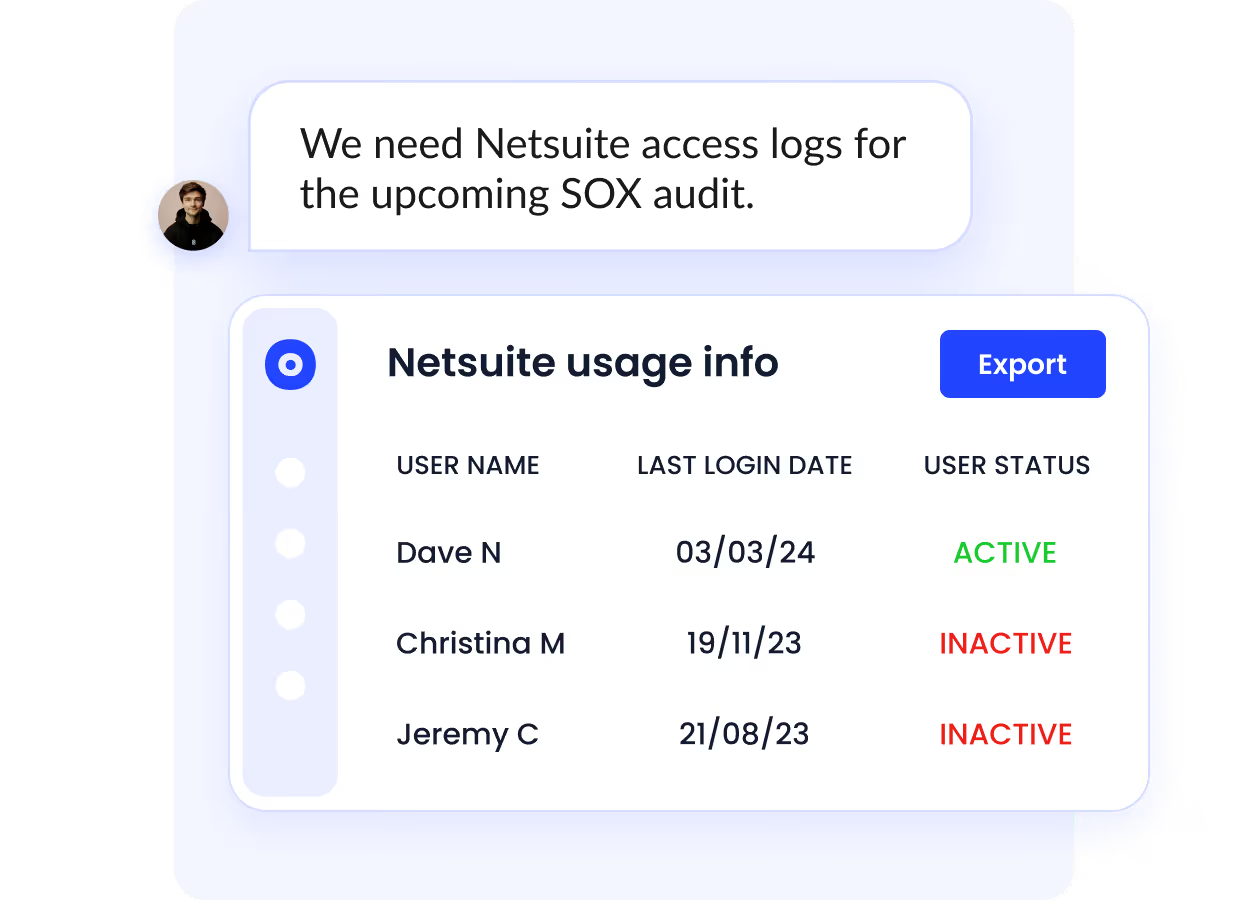
2. Vendor Security & Compliance Validation

Assessing a vendor’s security posture often requires chasing certifications, emailing account managers, or digging through shared drives for outdated documents. CloudEagle.ai automates this entire step.
Vendor Security & Compliance Validation

The platform integrates with 500+ SaaS applications and automatically collects and updates:

  • SOC 2, ISO 27001, HIPAA, GDPR certifications
  • Data processing and storage policies
  • Encryption standards and access control methods
  • Breach history, incident responses, and risk disclosures
  • Subprocessor and supply-chain risk information
  • Privacy and data-handling commitments

This creates a single, always up-to-date vendor security profile. IT, Security, and Legal teams no longer rely on guesswork—they get instant visibility into whether a vendor meets internal and regulatory standards before signing anything.

3. Renewal & Pricing Intelligence

Research shows 69% of software/SaaS contracts include auto-renewal clauses, making renewal terms one of the most important sections to review and negotiate.

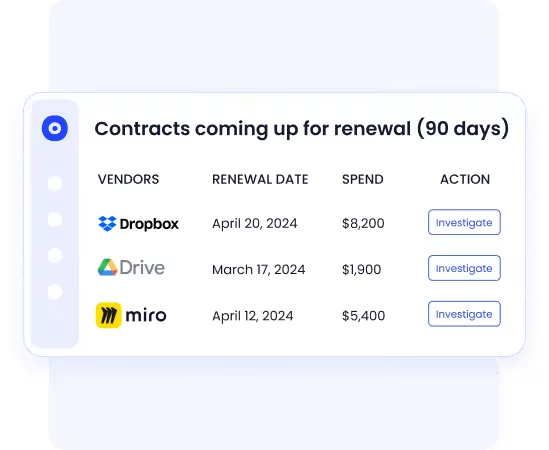
Renewal terms, pricing uplifts, and hidden fees are common sources of vendor overspending. CloudEagle.ai prevents these issues by applying proactive pricing intelligence across all contracts.
Renewal & Pricing Intelligence

The platform:

  • Tracks renewal dates and auto-renew triggers
  • Flags uplift clauses, rate increases, and hidden charges
  • Compares vendor pricing with anonymized peer benchmarks
  • Surfaces negotiation opportunities backed by real pricing data
  • Alerts teams months before renewal deadlines

This shifts organizations from reactive renewal management to data-driven negotiation, helping Procurement and Finance avoid surprises, negotiate better discounts, and reduce SaaS waste across the entire stack.

Case Study 1:  Discover how CloudEagle.ai helped Wefunder automate contract renewals with reminders never to miss deadlines.

4. Workflow Automation for MSA Approvals

MSA reviews often get stuck because each team waits for the other to weigh in. CloudEagle.ai replaces manual routing with automated, rules-based workflows.

Contracts are automatically assigned to:

  • Legal for terms, liability, and IP review
  • Security for compliance assessments and DPAs
  • IT for integration and technical requirements
  • Finance for pricing and budget validation
  • Business owners for functional approval

Each stakeholder receives the exact sections they need to review—nothing more, nothing less. This ensures:

  • Faster approval cycles
  • Fewer bottlenecks
  • Clearer accountability
  • Centralized documentation for audits

What once took weeks can now be completed in days—or even hours.

According to WorldCC and Icertis, businesses forfeit more than 5% of contract value due to misaligned risk terms, weak governance, and limited visibility into obligations.

5. Full Vendor Lifecycle Governance

CloudEagle.ai extends beyond MSA reviews. It governs the entire vendor lifecycle, ensuring consistent oversight from the moment a vendor is evaluated to the moment they are offboarded.

This includes:

  • Vendor discovery and selection
  • Contracting and onboarding
  • Access provisioning and least-privilege governance
  • License management and optimization
  • Security and compliance monitoring
  • Renewal management and pricing optimization
  • Final offboarding and deprovisioning

By centralizing every stage, organizations strengthen compliance, improve cost efficiency, and reduce operational risk—while giving teams a single system of record for all vendor-related decisions.

As recurring services and multi-project partnerships grow, legal teams report that standardized MSAs can reduce negotiation and review time by 25–40% for subsequent SOWs and change orders, significantly accelerating deal velocity and time-to-value.

Pratibha Mehta, Head of Operations at Falkonry, shares her positive experience with CloudEagle.ai. It simplifies vendor management, tracks renewals, and finds hidden apps. Automation saved her team 50% on a big contract and freed time for strategy. She highly recommends it for easy app and contract management.

Conclusion

A Master Service Agreement checklist is one of the most important contracts your organization will sign—yet it’s also where hidden risks often go unnoticed.

A structured master service agreement checklist or master service agreement review checklist helps you examine every clause, uncover red flags early, and maintain strong vendor partnerships without compromising security, compliance, or costs.

When paired with automation tools like CloudEagle.ai, you can streamline contract reviews, eliminate blind spots, and build a scalable, consistent vendor governance process across IT, Security, Legal, Procurement, and Finance.

Ready to modernize your contract process?

Book a CloudEagle.ai demo and see how fast, secure, and effortless Master Service Agreement checklist reviews can be.

Top IT Teams Follow These SaaS Management Practices to Save $2M+ Annually.

Grab the detailed guide that helps IT leaders optimize their entire SaaS portfolio efficiently

Get The Management Guide
CTA Thumbnail

FAQs

1. What should a Master Service Agreement checklist include?

It should include the scope of work, pricing terms, SLAs, IP rights, data security clauses, confidentiality, liability limits, dispute resolution policies, and termination rights.

2. How does an MSA protect my organization?

It defines clear responsibilities, sets legal protections, limits liability, ensures data security, and reduces risks associated with vendor relationships.

3. What’s the difference between an MSA and a Statement of Work (SOW)?

The MSA sets long-term contract rules; the SOW defines project-specific details like deliverables and timelines.

4. How often should MSAs be reviewed?

At least annually or before contract renewal to catch pricing changes, new risks, or compliance updates.

5. What are the biggest red flags to watch for in an MSA?

Auto-renewals, vague SLAs, unlimited liability, unclear data ownership, weak security clauses, and heavy vendor-favored terms.

Advertisement for a SaaS Subscription Tracking Template with a call-to-action button to download and a partial graphic of a tablet showing charts.Banner promoting a SaaS Agreement Checklist to streamline SaaS management and avoid budget waste with a call-to-action button labeled Download checklist.Blue banner with text 'The Ultimate Employee Offboarding Checklist!' and a black button labeled 'Download checklist' alongside partial views of checklist documents from cloudeagle.ai.Digital ad for download checklist titled 'The Ultimate Checklist for IT Leaders to Optimize SaaS Operations' by cloudeagle.ai, showing checklist pages.Slack Buyer's Guide offer with text 'Unlock insider insights to get the best deal on Slack!' and a button labeled 'Get Your Copy', accompanied by a preview of the guide featuring Slack's logo.Monday Pricing Guide by cloudeagle.ai offering exclusive pricing secrets to maximize investment with a call-to-action button labeled Get Your Copy and an image of the guide's cover.Blue banner for Canva Pricing Guide by cloudeagle.ai offering a guide to Canva costs, features, and alternatives with a call-to-action button saying Get Your Copy.Blue banner with white text reading 'Little-Known Negotiation Hacks to Get the Best Deal on Slack' and a white button labeled 'Get Your Copy'.Blue banner with text 'Little-Known Negotiation Hacks to Get the Best Deal on Monday.com' and a white button labeled 'Get Your Copy'.Blue banner with text 'Little-Known Negotiation Hacks to Get the Best Deal on Canva' and a white button labeled 'Get Your Copy'.Banner with text 'Slack Buyer's Guide' and a 'Download Now' button next to images of a guide titled 'Slack Buyer’s Guide: Features, Pricing & Best Practices'.Digital cover of Monday Pricing Guide with a button labeled Get Your Copy on a blue background.Canva Pricing Guide cover with a button labeled Get Your Copy on a blue gradient background.

Enter your email to
unlock the report

Oops! Something went wrong while submitting the form.
License Count
Benchmark
Per User/Per Year

Enter your email to
unlock the report

Oops! Something went wrong while submitting the form.
License Count
Benchmark
Per User/Per Year

Enter your email to
unlock the report

Oops! Something went wrong while submitting the form.
Notion Plus
License Count
Benchmark
Per User/Per Year
100-500
$67.20 - $78.72
500-1000
$59.52 - $72.00
1000+
$51.84 - $57.60
Canva Pro
License Count
Benchmark
Per User/Per Year
100-500
$74.33-$88.71
500-1000
$64.74-$80.32
1000+
$55.14-$62.34

Enter your email to
unlock the report

Oops! Something went wrong while submitting the form.

Enter your email to
unlock the report

Oops! Something went wrong while submitting the form.
Zoom Business
License Count
Benchmark
Per User/Per Year
100-500
$216.00 - $264.00
500-1000
$180.00 - $216.00
1000+
$156.00 - $180.00

Enter your email to
unlock the report

Oops! Something went wrong while submitting the form.

Get the Right Security Platform To Secure Your Cloud Infrastructure

Please enter a business email
Thank you!
The 2023 SaaS report has been sent to your email. Check your promotional or spam folder.
Oops! Something went wrong while submitting the form.

Access full report

Please enter a business email
Thank you!
The 2023 SaaS report has been sent to your email. Check your promotional or spam folder.
Oops! Something went wrong while submitting the form.

You're wasting 25% of your SaaS budget on unused licenses.

IT teams are using this guide to identify, reclaim, and prevent license waste across entire stack.

Download Free eBook
CTA Thumbnail

Did you ever sign a vendor contract you thought was airtight, only to discover surprise fees, hidden liabilities, or missing protections later?

It happens more often than teams realize. In fact, companies lose 8.6%–9.2% of their annual revenue due to poor contract management and overlooked terms. A big part of that comes from MSAs that weren’t reviewed carefully enough.

An MSA explains how you and a vendor will work together. But these documents can be long and confusing, which makes it easy to miss important details. Using an MSA checklist helps you spot red flags quickly and ensures nothing important gets overlooked.

Let’s explore an MSA checklist and how CloudEagle.ai helps automate contract reviews and flag risks.

TL;DR

  • An MSA outlines rules, responsibilities, service terms, pricing, data rights, and legal protections between businesses.
  • A standardized Master Service Agreement checklist helps organizations catch risks early, avoid surprises, and ensure consistent contract evaluation.
  • Key MSA components include scope of work, SLAs, pricing terms, IP ownership, data protection, liability limits, dispute resolution, and termination clauses.
  • Red flags include auto-renewals, vague SLAs, unlimited liability, unclear data ownership, and weak security provisions.
  • CloudEagle.ai automates MSA reviews using AI to detect risks, validate vendor compliance, and accelerate contract approvals.

What Is a Master Service Agreement (MSA)?

A Master Service Agreement (MSA) is a contract that sets the main rules for how two parties will work together. Instead of renegotiating terms for every new project, the MSA creates a long-term foundation that covers responsibilities, pricing, confidentiality, data protection, legal requirements, and how disputes will be handled.

After the MSA is signed, any new project simply uses a Statement of Work (SOW) to define the specific tasks, timelines, and costs, saving time and reducing back-and-forth.

An MSA helps you:

  • Shorten legal negotiation cycles,
  • Set clear expectations and protections,
  • Keep teams aligned,
  • Prevent future conflicts or confusion,
  • Stay compliant with legal and security requirements.

In short, an MSA is the backbone of a smooth, reliable business partnership.

Contract analysts estimate businesses lose up to $270B in economic value every year globally due to ineffective contract management and poor oversight of obligations.

IT teams spend 100+ hours/month manually tracking SaaS tools.

Automate optimization with this proven SaaS management framework.

Grab the Free eBook
CTA Thumbnail

Why a Master Service Agreement Checklist Matters for Businesses?

Studies show that 71% of companies can’t find at least 10% of their active contracts, which leads to missed obligations, surprise renewals, and unnecessary risks.

MSAs are also long, often 20–60 pages, and packed with legal, financial, and security details. Reviewing them without a structured process makes it easy to overlook terms that directly affect your organization, especially around:

  • Security and data protection,
  • Compliance (SOC 2, ISO 27001, GDPR, HIPAA, contract laws),
  • Pricing, renewals, and hidden fees,
  • Vendor performance and service quality,
  • Liability, indemnity, and risk allocation,
  • Termination rights and offboarding.

A well-designed master service agreement checklist or master service agreement review checklist helps businesses take a consistent, thorough approach to MSA reviews. It ensures that:

  • Each stakeholder evaluates the sections relevant to them,
  • No important clause or risk is missed,
  • Vendor onboarding becomes safer and more predictable,
  • IT, Security, Legal, Procurement, and Finance stay aligned,
  • Approvals move faster with fewer delays.

Master Service Agreement Checklist: Key Sections You Must Review

Here’s a breakdown of the most important sections in every MSA, and what to look for.

1. Scope of Work (SOW) & Deliverables

Defines what work will be performed and what both parties are responsible for.

What to Review?

  • Overall Scope Expectations: High-level description of the services the vendor will provide.
  • What Qualifies as Deliverables: A Clear list of outputs you should receive (reports, features, documents, services).
  • Performance Boundaries: What the vendor will and will not do.
  • What is Out of Scope: Tasks not included, preventing misunderstandings.
  • Responsibilities of Each Party: Ensures no tasks are duplicated or overlooked.

2. Pricing, Payment Terms & Invoicing Structure

Outlines how much you will pay and how billing works.

What to Review?

  • Pricing Model: Fixed, hourly, subscription, or usage-based.
  • Payment Terms: When payments are due (Net 15/30/45).
  • Invoice Accuracy: Ensures billing matches actual usage and agreed pricing.
  • Late Fees or Penalties: Extra charges for delayed payments.
  • Annual Increases or Uplifts: Yearly price hikes (common in SaaS).
  • Additional or Hidden Fees: Items not clearly stated upfront.

3. Service Levels (SLAs), Timelines & Quality Standards

Ensures the vendor meets clear performance expectations.

What to Review?

  • Uptime & Availability Guarantees: The minimum percentage of time the service must remain operational.
  • Response & Resolution Times: How quickly must issues be addressed?
  • Quality Measurements & KPIs: Standards for performance and service quality.
  • Penalties or Credits: Compensation for failed SLAs.
  • Escalation Process: Steps taken if issues escalate.
  • Reporting Frequency: How often performance data is shared.

4. Intellectual Property Rights & Ownership

Clarifies who owns what during and after the engagement.

What to Review?

  • Created Content: Documents or materials developed for you.
  • Code, Inventions & Tools: Ownership of software, scripts, or custom tools.
  • Data Generated from Service Usage: Logs, analytics, insights.
  • Custom Work or Configurations: Ownership of tailored features.
  • Pre-existing IP: What each side owned before the contract.

5. Data Security, Confidentiality & Privacy Requirements

One of the most critical sections for modern SaaS contracts.

What to Review?

  • Data Encryption: Encryption at rest and in transit.
  • Access Controls & Identity Management: Who can access your data and how.
  • Data Retention & Deletion: How long data is stored and how it’s deleted.
  • Breach Notification Timeline: Should be <72 hours.
  • Compliance Frameworks: SOC 2, ISO 27001, GDPR, HIPAA.
  • Subcontractor Requirements: Vendor’s third-party obligations.
  • Confidentiality Rules: Protection for sensitive information.

6. Compliance, Legal Requirements & Regulatory Clauses

Ensures the vendor follows all required laws and standards.

What to Review?

  • Industry-Specific Compliance: HIPAA, FINRA, FedRAMP, etc.
  • Cross-Border Data Transfer Rules: GDPR and global data laws.
  • GDPR Processing Rights: Rights for EU personal data.
  • Local Jurisdiction Requirements: Regional laws the vendor must follow.
  • Record-Keeping Obligations: How long and how must documents be stored?

7. Termination Rights, Notice Periods & Exit Clauses

Defines how the contract can end safely for both sides.

What to Review?

  • Termination for Convenience: Ending the contract without cause.
  • Termination for Cause: Ending the contract due to violations.
  • Notice Period: Usually 30–90 days.
  • Refund or Payment Terms: What happens to prepaid fees?
  • Post-Termination Data Handling: How data is deleted or returned.
  • Transition Support: Help provided during vendor offboarding.

8. Limitation of Liability & Indemnification

Manages legal and financial risk between both parties.

What to Review?

  • Liability Caps: Typically 1× annual contract value.
  • Exclusions: Data loss, confidentiality breaches, negligence.
  • Mutual Indemnification: Protection for both parties.
  • IP Infringement Protection: Vendor responsibility for IP violations.

9. Governance, Dispute Resolution & Escalation Paths

Prevents disagreements from turning into legal disputes.

What to Review?

  • Escalation Steps: How are issues raised and resolved?
  • Decision-Makers: Who has the authority to approve resolutions?
  • Jurisdiction & Governing Law: Which region’s laws apply?
  • Arbitration or Mediation Rules: Alternatives to going to court.
  • Dispute Resolution Process: Full outline of how conflicts are handled.

10. Performance Metrics, KPIs & Reporting Expectations

Ensures you can track whether the vendor meets expectations.

What to Review?

  • How Performance Is Measured: The metrics that matter.
  • Reporting Frequency: Weekly, monthly, quarterly, etc.
  • Quality Benchmarks: Minimum acceptable standards.
  • Productivity Requirements: Expected output level.
  • Tracking Mechanisms: Tools or systems used to measure performance.

How CloudEagle.ai Helps Automate MSA Reviews & Vendor Assessments?

Master Service Agreements checklists are long and complex, and manual reviews often lead to missed risks, slow approvals, and inconsistent feedback across Legal, IT, Security, Procurement, and Finance. These gaps can create compliance issues, unfavorable terms, or surprise renewal risks.

CloudEagle.ai solves this by using AI-powered analysis, automated workflows, and centralized vendor data to simplify and speed up MSA reviews. Instead of juggling spreadsheets and emails, teams get a clear, consistent, and audit-ready process that reduces risk and accelerates decisions.

Here’s how it helps:

1. AI Metadata Extraction & Automated Contract Risk Detection

Studies indicate that around 30% of SaaS licenses go unused in the average organization because contracts aren’t actively managed or right-sized over time.

AI Metadata Extraction & Automated Contract Risk Detection

Traditional MSA reviews require hours of manual reading, clause comparison, and cross-team review. CloudEagle.ai automates this entire process using advanced AI trained specifically on SaaS, legal, and security frameworks.

The platform scans MSAs, DPAs, SOWs, and addenda to extract metadata and flag risks such as:

  • Risky or one-sided clauses that shift responsibility unfairly
  • Missing SLAs or undefined performance expectations
  • Non-compliant legal language that violates SOC 2, GDPR, or HIPAA
  • Data security or privacy gaps that expose your organization
  • Renewal, auto-renew, or uplift risks are buried deep in the document
  • Inconsistencies between vendor proposals, contracts, and SOWs

By surfacing these insights instantly, CloudEagle.ai compresses legal review cycles from weeks to hours—helping organizations make faster, safer, and more confident decisions.

Check out how CloudEagle.ai helped Oyster HR eliminate spreadsheets with centralized contract management.

2. Vendor Security & Compliance Validation

Assessing a vendor’s security posture often requires chasing certifications, emailing account managers, or digging through shared drives for outdated documents. CloudEagle.ai automates this entire step.

Vendor Security & Compliance Validation

The platform integrates with 500+ SaaS applications and automatically collects and updates:

  • SOC 2, ISO 27001, HIPAA, GDPR certifications
  • Data processing and storage policies
  • Encryption standards and access control methods
  • Breach history, incident responses, and risk disclosures
  • Subprocessor and supply-chain risk information
  • Privacy and data-handling commitments

This creates a single, always up-to-date vendor security profile. IT, Security, and Legal teams no longer rely on guesswork—they get instant visibility into whether a vendor meets internal and regulatory standards before signing anything.

3. Renewal & Pricing Intelligence

Research shows 69% of software/SaaS contracts include auto-renewal clauses, making renewal terms one of the most important sections to review and negotiate.

Renewal terms, pricing uplifts, and hidden fees are common sources of vendor overspending. CloudEagle.ai prevents these issues by applying proactive pricing intelligence across all contracts.

Renewal & Pricing Intelligence

The platform:

  • Tracks renewal dates and auto-renew triggers
  • Flags uplift clauses, rate increases, and hidden charges
  • Compares vendor pricing with anonymized peer benchmarks
  • Surfaces negotiation opportunities backed by real pricing data
  • Alerts teams months before renewal deadlines

This shifts organizations from reactive renewal management to data-driven negotiation, helping Procurement and Finance avoid surprises, negotiate better discounts, and reduce SaaS waste across the entire stack.

Case Study 1:  Discover how CloudEagle.ai helped Wefunder automate contract renewals with reminders never to miss deadlines.

4. Workflow Automation for MSA Approvals

MSA reviews often get stuck because each team waits for the other to weigh in. CloudEagle.ai replaces manual routing with automated, rules-based workflows.

Contracts are automatically assigned to:

  • Legal for terms, liability, and IP review
  • Security for compliance assessments and DPAs
  • IT for integration and technical requirements
  • Finance for pricing and budget validation
  • Business owners for functional approval

Each stakeholder receives the exact sections they need to review—nothing more, nothing less. This ensures:

  • Faster approval cycles
  • Fewer bottlenecks
  • Clearer accountability
  • Centralized documentation for audits

What once took weeks can now be completed in days—or even hours.

According to WorldCC and Icertis, businesses forfeit more than 5% of contract value due to misaligned risk terms, weak governance, and limited visibility into obligations.

5. Full Vendor Lifecycle Governance

CloudEagle.ai extends beyond MSA reviews. It governs the entire vendor lifecycle, ensuring consistent oversight from the moment a vendor is evaluated to the moment they are offboarded.

This includes:

  • Vendor discovery and selection
  • Contracting and onboarding
  • Access provisioning and least-privilege governance
  • License management and optimization
  • Security and compliance monitoring
  • Renewal management and pricing optimization
  • Final offboarding and deprovisioning

By centralizing every stage, organizations strengthen compliance, improve cost efficiency, and reduce operational risk—while giving teams a single system of record for all vendor-related decisions.

As recurring services and multi-project partnerships grow, legal teams report that standardized MSAs can reduce negotiation and review time by 25–40% for subsequent SOWs and change orders, significantly accelerating deal velocity and time-to-value.

Pratibha Mehta, Head of Operations at Falkonry, shares her positive experience with CloudEagle.ai. It simplifies vendor management, tracks renewals, and finds hidden apps. Automation saved her team 50% on a big contract and freed time for strategy. She highly recommends it for easy app and contract management.

Conclusion

A Master Service Agreement checklist is one of the most important contracts your organization will sign—yet it’s also where hidden risks often go unnoticed.

A structured master service agreement checklist or master service agreement review checklist helps you examine every clause, uncover red flags early, and maintain strong vendor partnerships without compromising security, compliance, or costs.

When paired with automation tools like CloudEagle.ai, you can streamline contract reviews, eliminate blind spots, and build a scalable, consistent vendor governance process across IT, Security, Legal, Procurement, and Finance.

Ready to modernize your contract process?

Book a CloudEagle.ai demo and see how fast, secure, and effortless Master Service Agreement checklist reviews can be.

Top IT Teams Follow These SaaS Management Practices to Save $2M+ Annually.

Grab the detailed guide that helps IT leaders optimize their entire SaaS portfolio efficiently

Get The Management Guide
CTA Thumbnail

FAQs

1. What should a Master Service Agreement checklist include?

It should include the scope of work, pricing terms, SLAs, IP rights, data security clauses, confidentiality, liability limits, dispute resolution policies, and termination rights.

2. How does an MSA protect my organization?

It defines clear responsibilities, sets legal protections, limits liability, ensures data security, and reduces risks associated with vendor relationships.

3. What’s the difference between an MSA and a Statement of Work (SOW)?

The MSA sets long-term contract rules; the SOW defines project-specific details like deliverables and timelines.

4. How often should MSAs be reviewed?

At least annually or before contract renewal to catch pricing changes, new risks, or compliance updates.

5. What are the biggest red flags to watch for in an MSA?

Auto-renewals, vague SLAs, unlimited liability, unclear data ownership, weak security clauses, and heavy vendor-favored terms.

CloudEagle.ai recognized in the 2025 Gartner® Magic Quadrant™ for SaaS Management Platforms
Download now
gartner chart
5x
Faster employee
onboarding
80%
Reduction in time for
user access reviews
30k
Workflows
automated
$15Bn
Analyzed in
contract spend
$2Bn
Saved in
SaaS spend

Recognized as an Industry leader for our AI

CloudEagle.ai is Recognized in the 2024 Gartner® Magic Quadrant™ for SaaS Management Platforms

Recognition highlights CloudEagle’s innovation and leadership in the rapidly evolving SaaS management and procurement space.
Read More
Gartner Magic Quadrant for SaaS Management Platforms showing a chart divided into Challengers and Leaders quadrants with various companies plotted as dots.

CloudEagle.ai Recognized in the GigaOm Radar for SaaS Management Platforms

CloudEagle named a Leader and Outperformer in GigaOm Radar Report, validating its impact in the SaaS management platform landscape.
Read More
gigaom

Everest Group Positions CloudEagle.ai as a Trailblazer in SaaS Management Platforms

CloudEagle recognized as a Trailblazer by Everest Group, showcasing its rapid growth and innovation in SaaS spend and operations management.
Read More
qks

CloudEagle.ai is Recognized in the 2024 Gartner® Magic Quadrant™ for SaaS Management Platforms

Recognition highlights CloudEagle’s innovation and leadership in the rapidly evolving SaaS management and procurement space.
Read More
gartner

Streamline SaaS governance and save 10-30%

Book a Demo with Expert
CTA image
One platform to Manage
all SaaS Products
Learn More